Tag: women over 40

  • Creatine + Collagen, Treadmill Miles, and Strength: What I’m Doing to Rebuild Quietly

    Creatine + Collagen, Treadmill Miles, and Strength: What I’m Doing to Rebuild Quietly

    Disclosure: This post contains affiliate links. If you buy through them, I may earn a small commission at no extra cost to you. I only share what I actually use.

    Why I started

    In midlife, recovery and strength matter more than they used to. My 20s were different I would’ve tried any new gimmick that came along. By the time I hit my 30s, I knew the gimmicks were just that. So in this current season of my life, I wasn’t looking for a miracle. I wanted something simple that supports the work I’m already doing: lifting, walking, running, and showing up consistently.

    What I’m taking

    One product that has been heavy in rotation for me is the Ancient Nutrition’s creatine + collagen. I shared how I take it in a quick reel, which you can watch here. Here’s why I like having both in one scoop:

    • Creatine is one of the most researched supplements for strength and lean muscle, especially when paired with resistance training. Many women in perimenopause and beyond use it for that reason.
    • Collagen may support joint comfort and skin for some people. The research here is more mixed, so I see it as a nice extra, not the main event.

    Neither one replaces training, protein, sleep, or rest. They’re small supports, not shortcuts. And if you have a medical condition or take medication, check with your doctor first.

    Get Ancient Nutrition creatine + collagen here

    How it fits my week

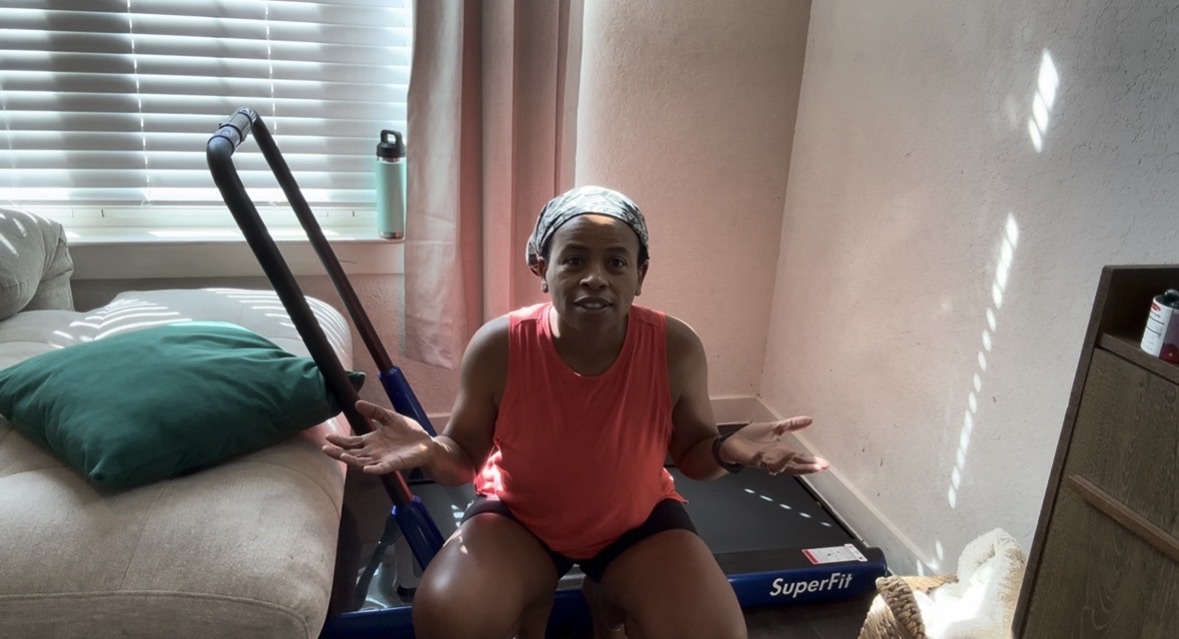
    Cardio and strength aren’t opposites. On treadmill days I keep the pace steady, then lift to keep building muscle. I walk through the full treadmill routine in my video: 

    I also linked strength training videos you can pair with it.

    A simple way to start

    1. Pick two or three strength days you can actually keep.
    2. Add treadmill time at an easy, conversational pace.
    3. Stay consistent for 4 weeks before judging anything.

    If you want a gentle structure to follow, my Starter Guide is a good place to begin: https://quietrebuildclub.com/free-starter-guide/

    Build in silence. Show up for yourself.
  • 5 Tricks I Use to Remember Why I Walked Into a Room

    5 Tricks I Use to Remember Why I Walked Into a Room

    You already know the feeling. You’re in the kitchen and you have absolutely no idea why. I talk about that moment in this week’s episode, but I wanted to actually write some tricks to use to get out of it, because a video’s not always the easiest thing to reference when you’re standing there mid-fog trying to remember what you came in for.

    1. Say Your Destination Out Loud Before You Move

    Before you get up, say the task out loud; even just to yourself. “Going to get my phone charger.” It sounds silly, but verbalizing it locks it into working memory in a way that just thinking it doesn’t.

    2. Walk Backward to Where You Started

    This one actually has research behind it. Returning to the room or spot where the thought first occurred to you often triggers the memory back your brain associates the thought with the environment it happened in, not the one you walked into.

    3. Keep a Running Note on Your Phone Lock Screen

    Not an app, not a to-do list; just a single note. Title it “Right Now” and you update it the second a task pops into your head. It takes five seconds and means you’re never relying on your memory to hold more than one thing at a time.

    4. Touch Something Related to the Task

    If you’re heading somewhere to grab an item, physically touch something connected to it. Like before you leave the house touch your keys if you’re headed out the door, touch the laundry basket if you’re headed to the washer. It gives your brain a physical anchor instead of an abstract one.

    5. Stop Multitasking the Walk

    This is the one that is actually the hardest one for me. I’m always thinking about 20 different things. But if you’re thinking about 20 other things while you walk to another room, you’re overwriting the task before you even get there. Walk with the one thought, and only that thought.

    None of This Means Something Is Wrong With You

    These moments are common. I know they are frustrating but they are completely normal for where a lot of us are in life right now. The tricks help but so does just knowing you’re not the only one standing in a doorway laughing at yourself.

    If you want a simple place to start rebuilding beyond just the mental fog like strength, energy, sleep, all of it; the Starter Guide walks you through it.

    👉🏾 Midlife Starter Guide

    Build in silence. Show up for yourself.
  • Why You Forget Words Mid Sentence

    Why You Forget Words Mid Sentence

    You’re mid-sentence. The word is right there, you see it, you know but then it’s just… gone. You laugh it off, or you don’t. Either way, it happens again tomorrow.

    If this sounds familiar, you’re not losing your mind, and you’re definitely not alone. This is one of the most common things I hear from women in this community, and it’s the topic that resonated more than anything else I’ve made. So, let’s actually talk about it.

    What’s Actually Happening

    Midlife brings hormonal shifts, particularly drops in estrogen, that affect the parts of the brain responsible for word retrieval and working memory. This isn’t a sign that something is fundamentally wrong with you. It’s a physiological shift and it’s happening to a lot of us at the exact same stage of life. Unfortunately, it’s usually all at once and usually quietly.

    Add in the 3am wake ups, stress, and the load most of us are carrying and the fog makes a lot more sense. Your brain isn’t broken. It’s busy due to a lack sleep and adjusting to new hormonal patterns.

    Why It Feels So Scary

    It’s about what forgetting it seems to mean. When it first started happening; I felt like I you’re slipping and getting older. That fear is heavier than the moment itself.

    What Actually Helps

    A few small things that make a real difference, without turning into one more thing on your to-do list:

    ● Slow down before you speak. There’s nothing wrong with taking a pause.

    ● Move your body daily, even briefly. Movement supports blood flow to the brain and measurably helps with clarity.

    ● Protect your sleep like it’s non-negotiable, because it is.

    ● Name it out loud with people who get it. Saying “brain fog moment” out loud takes away most of its power.

    You’re Not Alone in This

    This is the first post in a short series I’m calling Clear Days, where we’re working through brain fog, the 4am wake-ups, and the moments when your mind just won’t cooperate. We can do it together, without the hype and without pretending it isn’t real.

    If you caught the first episode on YouTube, this picks up right where that left off. If you haven’t yet, it’s a good place to start.

    Build in silence. Show up for yourself.

    I’m not a doctor or coach, just sharing I’m learning on this midlife journey.

  • Why You Gain Weight in Perimenopause Without Changing Anything

    Why You Gain Weight in Perimenopause Without Changing Anything

    You haven’t changed what you eat. You haven’t stopped moving. And yet the number on the scale, or the way your jeans fit, is different than it was two years ago. If you’ve been quietly wondering what you did wrong, I need to tell you something: you didn’t do anything wrong.

    This is one of the most common things I hear from women in this community, and it’s rarely talked about honestly. So let’s talk about it plainly. Here’s the actual science of what’s happening in your body right now.

    Your Hormones Are Running the Show Not Your Willpower

    During perimenopause, estrogen doesn’t just decline; it fluctuates unpredictably. Estrogen plays a role in how your body regulates fat storage and where it stores it. As levels shift, your body tends to hold more fat around the midsection, even at the exact same weight you were before. This isn’t about eating more. It’s a hormonal redistribution.

    At the same time, progesterone, which has a natural calming, water-balancing effect, often drops earlier and faster than estrogen. Lower progesterone can mean more water retention, more bloating, and more inflammation. None of that shows up on a nutrition label.

    Cortisol Is Quietly Working Against You

    Many of us are running on high cortisol without even realizing it. Poor sleep, caregiving load, work stress, and the hormonal shifts themselves all elevate it further. Just learning about this has helped me give myself more grace when I feel overwhelmed.

    Cortisol signals your body to hold onto fat, particularly around the abdomen, as a protective response. It’s biology reacting to a genuinely demanding season of life.

    Insulin Sensitivity Changes, Too

    As estrogen declines, your cells can become less responsive to insulin, meaning your body has to work harder to manage blood sugar. This can lead to more fat storage and more energy crashes even when your meals haven’t changed at all. This is exactly why strength training matters so much right now: it’s one of the most effective tools for improving insulin sensitivity during this transition.

    So What Actually Helps?

    Not a 30-day fix. Not cutting calories further that often backfires by adding more stress to an already taxed system. What helps is steady strength training, protein at each meal, consistent sleep and wake times, and giving your nervous system real recovery. Slow and sustainable. It’s unglamorous but it works with your biology instead of against it.

    → Download the free guide: https://quietrebuildclub.com/free-starter-guide/

    The Real Takeaway

    If your body feels different and nothing you’re doing has changed, that’s not a mystery: it’s perimenopause. You’re not failing at maintaining your body. Your body is adapting to a completely different hormonal environment than it had at 30, and it deserves a different approach, not more punishment.

    You’re not starting over. You’re starting from experience and this time, you get to work with your body instead of against it.

    Kristie

    Build in silence. Show up for yourself.

    Welcome To Quiet Rebuild Club.

    Disclaimer: I’m not a doctor or medical professional. This post shares general information based on personal experience and public research, not medical advice. Please talk to your healthcare provider about your individual symptoms and needs.