There is a sneaky myth out there that as we move into midlife and perimenopause, our fitness should become gentler, slower, and entirely focused on long stretches of intense cardio. We are told to lace up our running shoes or jump on a spin bike for 45 minutes to “sweat it out.”
But if you’ve tried that lately, you might have noticed something frustrating: instead of feeling energized, you feel completely exhausted. Your joints ache, your brain fog feels heavier, and you might even be gaining stubborn weight around your midsection despite doing everything “right.”
When I believed that myth, I was doing 45 minutes to an hour of cardio everyday. Then napping the rest of the day. I also noticed no difference in how my clothes were fitting. I knew something had to change.
Here is the truth the mainstream fitness industry misses: when estrogen drops, our body’s rules change.
In midlife, endless high-intensity cardio spikes our cortisol (the stress hormone), which triggers inflammation and tells our body to hold onto fat for survival. To protect our health, boost our metabolism, and feel at home in our skin again, our fitness needs a shift.
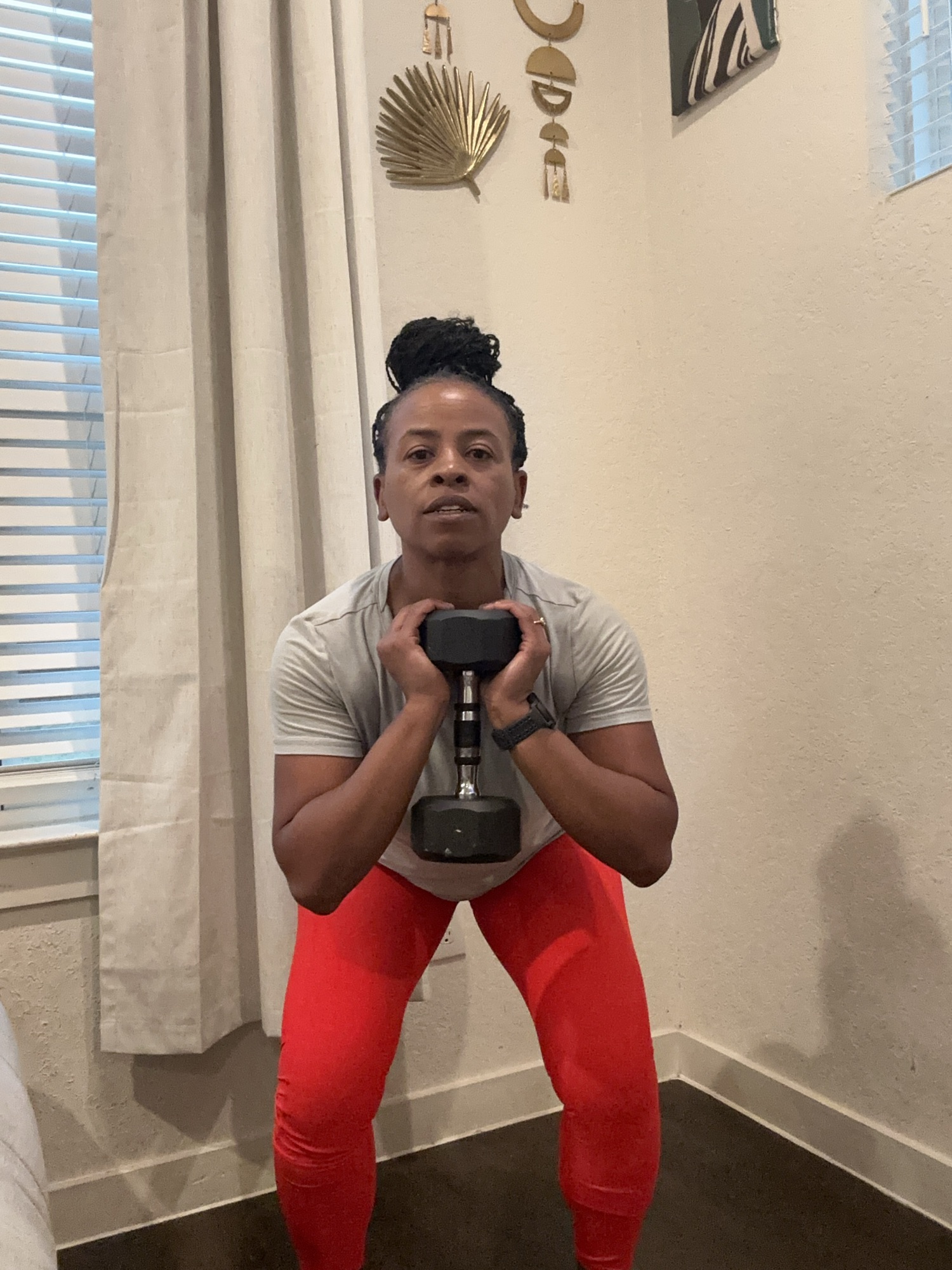
Lifting weights isn’t just a recommendation anymore. It is completely non-negotiable. It wasn’t until after I put strength training at the forefront of routine when I noticed I change. In my body and how I felt.
The Midlife Shift: Bones, Joints, and Estrogen
Estrogen is a powerhouse hormone. Throughout our lives, it acts as a natural protective shield for our bones and our joints. It helps maintain bone density and keeps our joints lubricated and cushioned.
As we enter perimenopause and midlife, that estrogen shield naturally begins to drop. Without it, our bone density can decline, and our joints become more vulnerable to aches, stiffness, and injury.
This is where strength training steps in as your ultimate defense system.
When you lift weights, you aren’t just building visible muscle. You are sending a direct signal to your body to preserve and strengthen your bone matrix. Resistance training puts a safe, healthy stress on your bones, forcing them to rebuild denser and stronger. It also strengthens the muscles surrounding your joints, creating a built-in support system that keeps you moving pain-free.
The Blueprint: How to Find Your Safe Starting Weight
The biggest roadblock keeping most women from starting a strength routine is simply not knowing where to begin. You walk into a gym or look at a rack of dumbbells at home, and you see two extremes: tiny 2-pound pink weights or heavy 15-pound dumbbells.
Grabbing weights that are too light won’t give your muscles the signal they need to grow. But jumping straight to weights that are too heavy can trigger acute joint strain and spike your nervous system’s stress response.
To find your perfect sweet spot, use
The 2-Rep Rule:
Pick up a pair of dumbbells (for most women starting out with upper-body movements like shoulder presses or rows, this magic number is right between 5 to 8 pounds). Perform a set of 10 repetitions with slow, controlled form.
- If you breeze past 12 reps without your muscles feeling tired, the weight is too light.
- If your form breaks or your joints pinch before you hit rep 8, it’s too heavy.
- The Sweet Spot: Choose a weight where reps 10 and 11 feel genuinely tough, but your form remains absolutely flawless.
Clean Recovery: Supporting Your Muscles from the Inside Out
Building lean muscle stability requires more than just moving your body; it requires giving your cells the clean internal support they need to rebuild.
As our muscle mass naturally wants to decline in this stage of life, meeting your daily protein requirements becomes essential. However, many conventional protein powders on the market are packed with artificial fillers and dairy bases that lead to uncomfortable digestive bloat.
That is why clean, easily digestible nutrition is essential. Incorporating a high-quality, whole-food-based protein into your daily routine provides the exact amino acids your body needs to repair muscle tissue and support joint health, without any of the digestive distress.
A single scoop mixed into a simple post-workout smoothie or shaken up with water is a seamless way to guarantee your body has the raw materials it needs to recover cleanly and efficiently.
I put a single scoop of Ancient Nutrition Collagen + Creatin powder in water with a lemon squeeze. It’s currently my favorite lemonade.
Disclaimer: This post contains affiliate links. If you make a purchase through these links, I may earn a small commission at no extra cost to you.
Your Next Step to a Quiet Rebuild
Restarting your fitness journey after 40 isn’t about exhausting yourself or punishing your body. It is about a quiet, intentional rebuild. It’s about protecting your spine, strengthening your bones, and cultivating the functional power you need for real, daily life.
Start small, focus on controlled form, and give your body the time it needs to adapt. Consistency beats intensity every single time.
Ready for a complete, guided routine?
This Thursday, I am dropping a full, joint-safe Upper Body & Core longform workout routine right here on the channel. We will walk through the movements together, focus on flawless form, and build a strong foundation safely.
Make sure to subscribe to our newsletter and channel so you don’t miss it!
Disclaimer: I am a certified personal trainer, but I am not your doctor. Always consult with a healthcare provider before starting a new exercise program, especially if you are navigating injury or significant structural changes.

