Tag: perimenopause exercise

  • Why Working Out Harder Isn’t Working After 40 (Like It Used To) It’s Your Cortisol

    Why Working Out Harder Isn’t Working After 40 (Like It Used To) It’s Your Cortisol

    This post contains affiliate links. I may earn a small commission at no extra cost to you.

    You’re doing everything right. You’re showing up. You’re pushing through. You’re working out more than you ever have and somehow your body isn’t responding the way it used to.


    If that’s you, you are not doing it wrong. Your body is doing something different.

    Once I understood what was actually happening in my own body after 40, everything changed. I mean I knew it was coming. I watched my mom go through hot flashes and laugh. She used to say she was, “going through the change.” I didn’t understand it then but I definitely do now. “The change” is very accurate.

    The body changes were already happening at 40 but it didn’t really hit me until around 45. That’s when I really started to notice that things weren’t changing as fast as they used to. Not because I wasn’t working out hard enough, but because I finally stopped trying to.

    Your Body After 40 Is Playing by Different Rules

    Here’s the thing nobody tells you when you hit your 40s: the workouts that used to work can actually start working against you.

    I’ve been doing some research on the why and how. And by research I mean Google and what I found was interesting.


    When we push really hard like with super long cardio sessions, back-to-back intense workouts, without taking any rest; our bodies release a stress response. That stress response is normal. It’s how we get stronger.


    But after 40, especially if you’re in perimenopause or heading that direction, your body has a harder time recovering from that stress. It stays in that heightened state longer. When that happens, your body actually holds onto weight, especially around the stomach. You feel more tired, not less. You’re sore longer. Your sleep gets worse. Sometimes it feels like you’re working harder and feeling worse and it makes no sense. Until you understand what’s happening.

    More Is Not Always More


    I used to think the answer was always to do more. More reps. More days. More intensity. Push through the tired. Earn the rest.
    That mindset hasn’t served me after lately. Although I do admit that I never take a full rest day. I’m not there yet. Even if it’s a 2 mile walk around the neighborhood; I’m moving daily. The feeling I get after a sweat session never gets old. Stress and worry is always gone when I’m done moving.


    This consistency of movement I built up is why I like to move daily. What actually started helping me was just doing it consistently. Shorter workouts sometimes. More rest between sets. Strength training instead of only long cardio. And honestly? More sleep.

    Sleep has been a game changer! My 5am workouts are greatly affected by the time I go to bed the night before.

    Magnesium is also supposed to help with perimenopause symptoms. It’s said to help with sleep, hot flashes, muscles cramps and more. I just ordered this one from Amazon if you want to try it with me. I’ll get back to you on how it makes me feel after I’ve tried it for a bit.


    I also made a whole YouTube video about movements. It’s a Perimenopause Workout: Effective Strength Routine You Can Do at Home. I walk you through five moves you can do instead of grinding through high-intensity sessions. You can do them alone or add them to your current plan. It’s real, it’s simple, and it’s built for the body we actually have right now.
    Go watch it. Then come back here.

    A Simple Week That Actually Works


    This is roughly what a week can look like:


    • Monday — 20-minute strength (lower body focus)
    • Tuesday — 20-minute walk
    • Wednesday — 20-minute strength (upper body focus)
    • Thursday — rest
    • Friday — full body (strength & cardio)
    • Weekend — movement that feels good like playing at the park with the kids, shopping with friends, neighborhood walk, hikes, etc; no pressure
    Some weeks look exactly like that. Some weeks Monday becomes Wednesday and Friday disappears entirely. That’s okay. Showing up imperfectly is still showing up. Consistency is key. Once you get a flow, you can build upon that. (If you choose to.)


    If you want a gentle place to start, my Quiet Rebuild Starter Guide is free and gives you a simple framework to build from and there’s no gym required.


    And if you’re specifically navigating perimenopause or menopause, I also have a 7-Day Midlife Reset Guide built specifically for where you are right now.

    You Don’t Have to Earn Rest


    The biggest shift for me wasn’t a new workout. It was giving myself permission to stop treating rest like a failure. And I’m still working on it.


    Just know that…you are not behind. You are not broken. Your body is changing, and it’s asking you to change with it not fight it.
    Work smarter. Rest on purpose. Show up consistently. That’s the whole thing.

    If this resonated with you, save it, share it with a friend who needs to hear it, and come find me on Instagram @quietrebuildclub and @KristieRebuilds on YouTube. I post real workouts, real life, no pressure.

    Related posts you might like:
    Home Workouts for Perimenopause: How to Move Your Body When Everything Feels Different
    What to Do When You Fall Off Your Fitness Routine
    How to Get Back Into Fitness When You’re Exhausted

    Affiliate disclosure: This post contains affiliate links. If you purchase through my links, I may earn a small commission at no extra cost to you. I only recommend things I actually use.
  • Home Workouts for Perimenopause: How to Move Your Body When Everything Feels Different

    Home Workouts for Perimenopause: How to Move Your Body When Everything Feels Different

    You didn’t change. Your body did.

    You’ve been here before. Building a routine, feeling good in your body, showing up consistently. And then something shifted. The energy during your workouts don’t feel the same anymore. The weight you’ve always managed started collecting somewhere new. You’re waking up at 3am, dragging through 2pm, and wondering if you’re imagining the fact that everything is harder than it used to be.

    You’re not imagining it. And you’re not alone.

    My workouts during my 20s and 30s were easy. Almost instant results and energy that would last for days.

    But perimenopause changed all of that.

    Now that I’m in my 40s; the results seem to take longer, aren’t the same and the energy is unpredictable. I’ve spent so much time wondering what was going on with me. But after many conversations and research; I was able to get down to the bottom of it.

    Perimenopause and menopause changes how your body responds to exercise. The good news is that movement is one of the most powerful tools you have during this transition. The better news is that you don’t need a gym, a complicated program, or more energy than you actually have. You just need the right kind of movement, built around the body you have right now.

    This guide covers everything you need to know about home workouts for perimenopause: why your body is responding differently, what types of exercise actually help, and how to build a gentle, realistic routine that works with your hormones.

    Why Exercise Feels Different During Perimenopause

    Before we get to the workouts, it helps to understand what’s actually happening in your body. Perimenopause typically begins in the early-to-mid 40s, though it can start earlier, and it’s defined by fluctuating and eventually declining levels of estrogen and progesterone.

    Here’s what that means for your body during exercise:

    • Energy fluctuates more than it used to. A workout that felt manageable last week might feel impossible this week. That’s a hormonal reality, not a lack of willpower.

    • Recovery takes longer. Declining estrogen affects how quickly muscles repair after exercise. High-intensity workouts that once bounced back in 24 hours might need 48–72 now.

    • Your metabolism is shifting. Hormonal changes lower your resting metabolic rate and increase how quickly fat is stored, especially around the midsection — even if you haven’t changed what you eat.

    • Muscle and bone need more attention. Estrogen helps maintain both. As levels drop, muscle mass and bone density can decline faster. Strength training becomes more important than ever during this window.

    • Heat tolerance decreases. Hot flashes and night sweats affect your internal thermostat. High-intensity cardio can trigger or worsen symptoms for some women.

    When you know why your body is responding the way it is, you can stop fighting it and start working with it.

    The 5 Keywords I Researched and Why They Matter for You

    If you’ve been searching for answers and finding nothing that quite fits, here’s why: most fitness content isn’t built for perimenopause. It’s built for younger bodies or post-menopausal women. I was doing the same workout I did in my 20s and 30s but the results weren’t the same. I was looking for answers. And found that we are in a specific window with specific needs.

    What Type of Exercise Actually Helps During Perimenopause

    Not all exercise has the same effect during perimenopause. Here’s a breakdown of what the research supports and what that looks like in a real home workout:

    Strength Training: Your Most Important Tool

    Strength training; using bodyweight, resistance bands, or light dumbbells. It is the single most well-supported form of exercise for women in perimenopause. Research consistently shows it helps preserve muscle mass, slow bone density loss, improve metabolic rate, and reduce body fat, especially around the midsection.

    You don’t need heavy weights or a gym. Bodyweight squats, glute bridges, modified push-ups, and resistance band rows are all strength training. Aim for 2–3 sessions per week, working all major muscle groups.

    Low-Impact Cardio: Consistency Over Intensity

    Cardio remains one of the most recommended forms of cardio for women in perimenopause. I swear by it. Even 10–20 minutes counts.

    It doesn’t have to be jogging or running. Cycling and swimming are also good options. The goal is movement that elevates your heart rate.

    Mind-Body Movement: Often Overlooked, Genuinely Powerful

    Yoga, Pilates, and stretching aren’t “less than” strength training during perimenopause. They help to support a body that is navigating sleep disruption, mood fluctuation, and physical stress. Research shows mind-body practices can improve sleep quality, reduce anxiety, and support bone mineral density.

    And on the days when your body has a limit of 15 minutes and a yoga mat: that counts. It always counts.

    Rest: Not Optional, Actually Productive

    This is the hardest for me. Recovery is part of the training. During perimenopause, your body needs more recovery time between intense efforts. Building intentional rest into your week isn’t giving up; it’s smart. Rest might not be taking a full day off. Maybe you took a walk instead of running or a high intensity run.

    A Simple Home Workout Structure for Perimenopause

    You don’t need a complicated program. You need a structure that is realistic for real life that includes busy days, low-energy days, hot-flash days, and everything in between. Here’s a simple weekly framework:

    • 2–3 days: Strength-focused. 15–30 minutes. Bodyweight or light resistance. Focus on glutes, legs, back, and core. Rest at least one day between sessions.

    • 2 days: Cardio. A walk, jog, yoga, stretching, or a short low-impact session on low-energy days.

    • 2 days: Rest. Actual rest. Sleep, hydration, and letting your body recover.

    The most important part of this framework? It’s built around what’s actually possible. Not what’s ideal on paper. A 15-minute workout at 9pm after the kids are asleep counts exactly the same as a workout you planned for 6am. The one you actually do is always the right one.

    Ready to follow a done-for-you plan?
    The 7-Day Midlife Reset is a gentle workout guide built specifically for women in perimenopause and menopause. Low impact, home-based, no equipment. Seven days of workouts you can start tonight.
    → Download instantly for $17 👉🏽 7 Day Midlife Reset

    What to Stop Doing (Or Do Less Of)

    This isn’t about what you can’t do. It’s about what’s working harder against your body than for it right now:

    • Punishing yourself for rest days. Rest is not failure. It is literally part of how your body rebuilds.

    • Comparing your current capacity to a past version of yourself. Your body at 44 or 48 or 52 is not failing to be 32. It’s navigating a different hormonal reality. (This was a hard one for me to let go of.)

    • Skipping strength training in favor of cardio only. For perimenopausal weight changes and bone health, this is the most common mistake. Cardio matters but strength training is non-negotiable during this window.


    The Quiet Rebuild Approach to Perimenopause Fitness

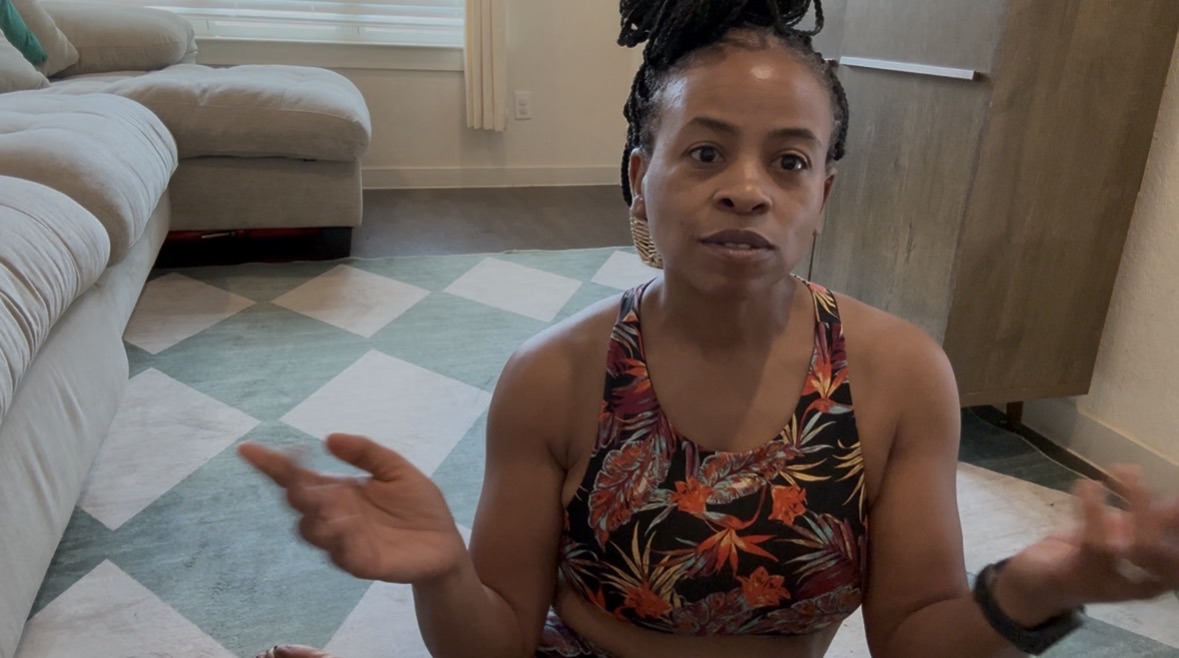
    At Quiet Rebuild Club, I’m building content specifically for the woman who is navigating fitness in the middle of real life not an idealized version of it. That means home workouts filmed in actual living rooms, routines designed for the body you have today (not the one you had at 30), and a community that supports that.

    If you’re in perimenopause and you’re trying to find your way back to movement, you’re in exactly the right place.

    Download the Midlife Rebuild Starter Guide — a 7-day gentle reset designed specifically for women 40+, built around the way your body actually works during hormonal transition. No gym. No pressure. Just a starting point.

    The Bottom Line

    Perimenopause changes how your body responds to exercise but it doesn’t mean you can’t move, rebuild, or feel strong in your body again. It means you need a different approach.

    Less punishment, more intention. Less comparison, more consistency. Less “push through it,” more “this is enough.”

    The woman who does 20 minutes of bodyweight strength in her living room at 9pm, on a day when everything was hard, is doing exactly enough.

    Build in silence. Show up for yourself.

    — Kristie