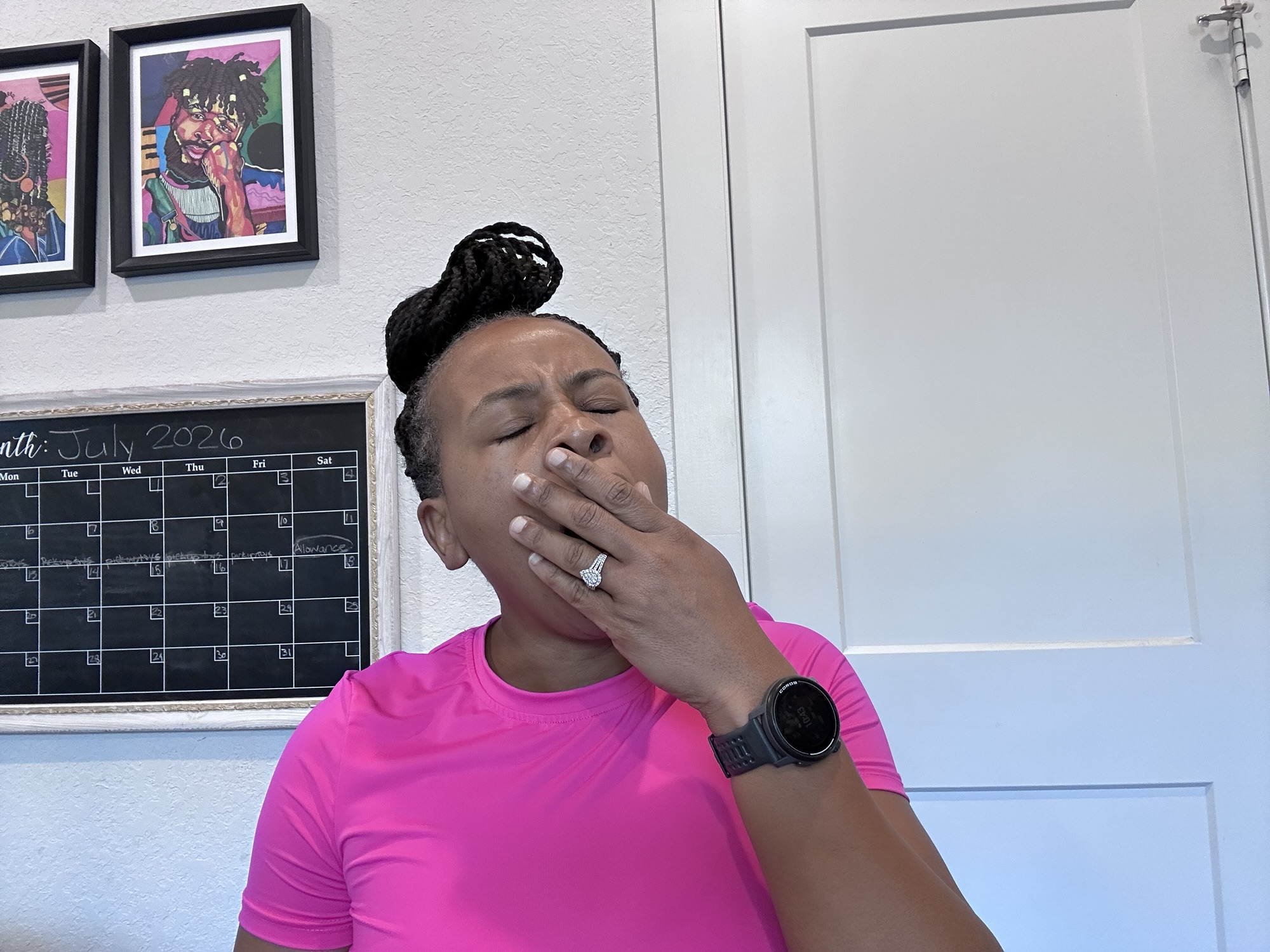
2:47am. Staring at the ceiling fan. Doing math on how many hours of sleep I had left if I fell back asleep right now. Which, of course, made falling back asleep completely impossible.
If you know that exact feeling, you’re not going crazy.
It’s Not Random
For a long time I thought my sleep was just bad. No pattern, no reason, just bad luck some nights and fine on others. Turns out that 3am wake-up isn’t random at all. It’s a hormone thing most of us were never told about.
As estrogen and progesterone shift during perimenopause, they take your sleep with them. Progesterone in particular has a calming, sleep-supporting effect and when it drops, so does your ability to stay asleep through the night. Add in cortisol that’s already running a little hot from stress, poor sleep, or both, and 3am becomes a very predictable place to land wide awake.
I would lay in bed at night so mad at myself about waking up at 3am. But turns out it wasn’t me.
This isn’t a willpower problem. It’s biology.
What It Actually Cost Me
Broken sleep didn’t just make me tired. It made me short. Short with my patience, short with my son and husband, and short with myself. I’d drag through the day running on caffeine and forced cheerfulness, then lie down at night and feel my whole body brace for it to happen again. I didn’t look forward to bedtime at all. The dread of the wake-up became almost worse than the wake-up itself.
That’s the part nobody told me about perimenopause insomnia. It’s not just the missing hours. It’s what missing them does to the rest of your life.
What Actually Shifted (I Didn’t “Fix” It)
I didn’t crack some code and suddenly sleep through the night forever. What I found were a few things that made the nights more manageable not perfect, just better.
- A consistent wake time, even after a rough night. This mattered more than anything I did at bedtime.
- A cooler room. Your body needs to drop its core temperature to fall asleep, and that’s harder during perimenopause. A fan or a few degrees down on the thermostat helps more than it sounds like it should.
- Box breathing instead of reaching for my phone when I woke up. In for 4, hold for 4, out for 4, hold for 4. The anxiety about not sleeping was often worse than the waking itself — this gave my nervous system somewhere else to go.
None of it is dramatic. All of it is real and I’ve found that they are very helpful.
If This Is You Too
If you’re doing that same 3am math, staring at your own ceiling fan, I made something for exactly this moment. It’ a gentle way back into taking care of yourself, without any pressure to overhaul your whole life overnight.
Grab the free Midlife Rebuild Starter Guide →
It’s a 7-day guide to easing back into movement and routine. It is built for the body you actually have right now, tired nights and all.
And if you want to go deeper on the hormonal side of what’s happening at night, I made a full video walking through it:
You’re not failing at sleep. You’re just navigating a season your body hasn’t been through before.
Build in silence. Show up for yourself… even on the mornings that start at 3am.