Tag: Home Workouts

  • Home Workouts for Perimenopause: How to Move Your Body When Everything Feels Different

    Home Workouts for Perimenopause: How to Move Your Body When Everything Feels Different

    You didn’t change. Your body did.

    You’ve been here before. Building a routine, feeling good in your body, showing up consistently. And then something shifted. The energy during your workouts don’t feel the same anymore. The weight you’ve always managed started collecting somewhere new. You’re waking up at 3am, dragging through 2pm, and wondering if you’re imagining the fact that everything is harder than it used to be.

    You’re not imagining it. And you’re not alone.

    My workouts during my 20s and 30s were easy. Almost instant results and energy that would last for days.

    But perimenopause changed all of that.

    Now that I’m in my 40s; the results seem to take longer, aren’t the same and the energy is unpredictable. I’ve spent so much time wondering what was going on with me. But after many conversations and research; I was able to get down to the bottom of it.

    Perimenopause and menopause changes how your body responds to exercise. The good news is that movement is one of the most powerful tools you have during this transition. The better news is that you don’t need a gym, a complicated program, or more energy than you actually have. You just need the right kind of movement, built around the body you have right now.

    This guide covers everything you need to know about home workouts for perimenopause: why your body is responding differently, what types of exercise actually help, and how to build a gentle, realistic routine that works with your hormones.

    Why Exercise Feels Different During Perimenopause

    Before we get to the workouts, it helps to understand what’s actually happening in your body. Perimenopause typically begins in the early-to-mid 40s, though it can start earlier, and it’s defined by fluctuating and eventually declining levels of estrogen and progesterone.

    Here’s what that means for your body during exercise:

    • Energy fluctuates more than it used to. A workout that felt manageable last week might feel impossible this week. That’s a hormonal reality, not a lack of willpower.

    • Recovery takes longer. Declining estrogen affects how quickly muscles repair after exercise. High-intensity workouts that once bounced back in 24 hours might need 48–72 now.

    • Your metabolism is shifting. Hormonal changes lower your resting metabolic rate and increase how quickly fat is stored, especially around the midsection — even if you haven’t changed what you eat.

    • Muscle and bone need more attention. Estrogen helps maintain both. As levels drop, muscle mass and bone density can decline faster. Strength training becomes more important than ever during this window.

    • Heat tolerance decreases. Hot flashes and night sweats affect your internal thermostat. High-intensity cardio can trigger or worsen symptoms for some women.

    When you know why your body is responding the way it is, you can stop fighting it and start working with it.

    The 5 Keywords I Researched and Why They Matter for You

    If you’ve been searching for answers and finding nothing that quite fits, here’s why: most fitness content isn’t built for perimenopause. It’s built for younger bodies or post-menopausal women. I was doing the same workout I did in my 20s and 30s but the results weren’t the same. I was looking for answers. And found that we are in a specific window with specific needs.

    What Type of Exercise Actually Helps During Perimenopause

    Not all exercise has the same effect during perimenopause. Here’s a breakdown of what the research supports and what that looks like in a real home workout:

    Strength Training: Your Most Important Tool

    Strength training; using bodyweight, resistance bands, or light dumbbells. It is the single most well-supported form of exercise for women in perimenopause. Research consistently shows it helps preserve muscle mass, slow bone density loss, improve metabolic rate, and reduce body fat, especially around the midsection.

    You don’t need heavy weights or a gym. Bodyweight squats, glute bridges, modified push-ups, and resistance band rows are all strength training. Aim for 2–3 sessions per week, working all major muscle groups.

    Low-Impact Cardio: Consistency Over Intensity

    Cardio remains one of the most recommended forms of cardio for women in perimenopause. I swear by it. Even 10–20 minutes counts.

    It doesn’t have to be jogging or running. Cycling and swimming are also good options. The goal is movement that elevates your heart rate.

    Mind-Body Movement: Often Overlooked, Genuinely Powerful

    Yoga, Pilates, and stretching aren’t “less than” strength training during perimenopause. They help to support a body that is navigating sleep disruption, mood fluctuation, and physical stress. Research shows mind-body practices can improve sleep quality, reduce anxiety, and support bone mineral density.

    And on the days when your body has a limit of 15 minutes and a yoga mat: that counts. It always counts.

    Rest: Not Optional, Actually Productive

    This is the hardest for me. Recovery is part of the training. During perimenopause, your body needs more recovery time between intense efforts. Building intentional rest into your week isn’t giving up; it’s smart. Rest might not be taking a full day off. Maybe you took a walk instead of running or a high intensity run.

    A Simple Home Workout Structure for Perimenopause

    You don’t need a complicated program. You need a structure that is realistic for real life that includes busy days, low-energy days, hot-flash days, and everything in between. Here’s a simple weekly framework:

    • 2–3 days: Strength-focused. 15–30 minutes. Bodyweight or light resistance. Focus on glutes, legs, back, and core. Rest at least one day between sessions.

    • 2 days: Cardio. A walk, jog, yoga, stretching, or a short low-impact session on low-energy days.

    • 2 days: Rest. Actual rest. Sleep, hydration, and letting your body recover.

    The most important part of this framework? It’s built around what’s actually possible. Not what’s ideal on paper. A 15-minute workout at 9pm after the kids are asleep counts exactly the same as a workout you planned for 6am. The one you actually do is always the right one.

    Ready to follow a done-for-you plan?
    The 7-Day Midlife Reset is a gentle workout guide built specifically for women in perimenopause and menopause. Low impact, home-based, no equipment. Seven days of workouts you can start tonight.
    → Download instantly for $17 👉🏽 7 Day Midlife Reset

    What to Stop Doing (Or Do Less Of)

    This isn’t about what you can’t do. It’s about what’s working harder against your body than for it right now:

    • Punishing yourself for rest days. Rest is not failure. It is literally part of how your body rebuilds.

    • Comparing your current capacity to a past version of yourself. Your body at 44 or 48 or 52 is not failing to be 32. It’s navigating a different hormonal reality. (This was a hard one for me to let go of.)

    • Skipping strength training in favor of cardio only. For perimenopausal weight changes and bone health, this is the most common mistake. Cardio matters but strength training is non-negotiable during this window.


    The Quiet Rebuild Approach to Perimenopause Fitness

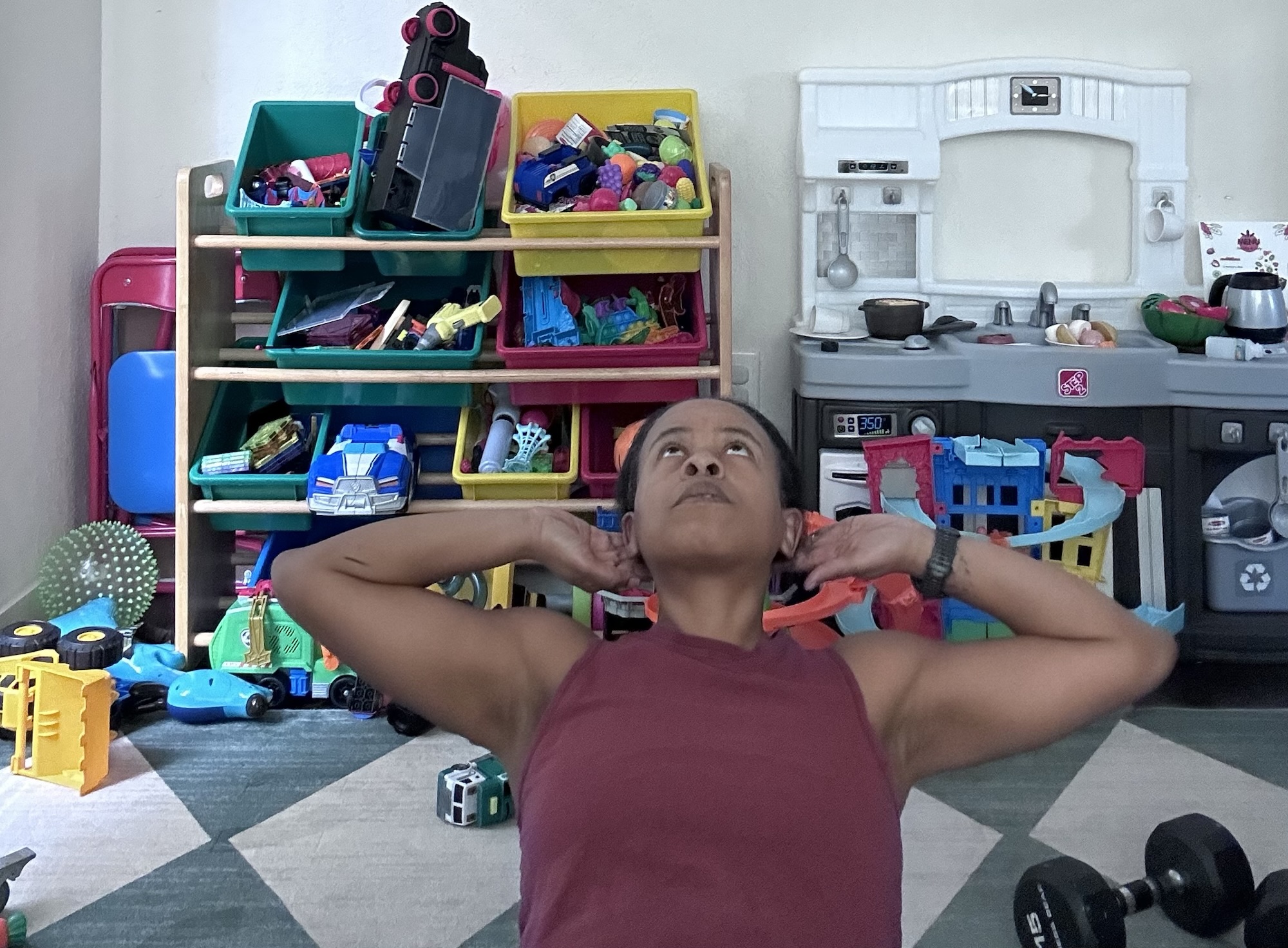
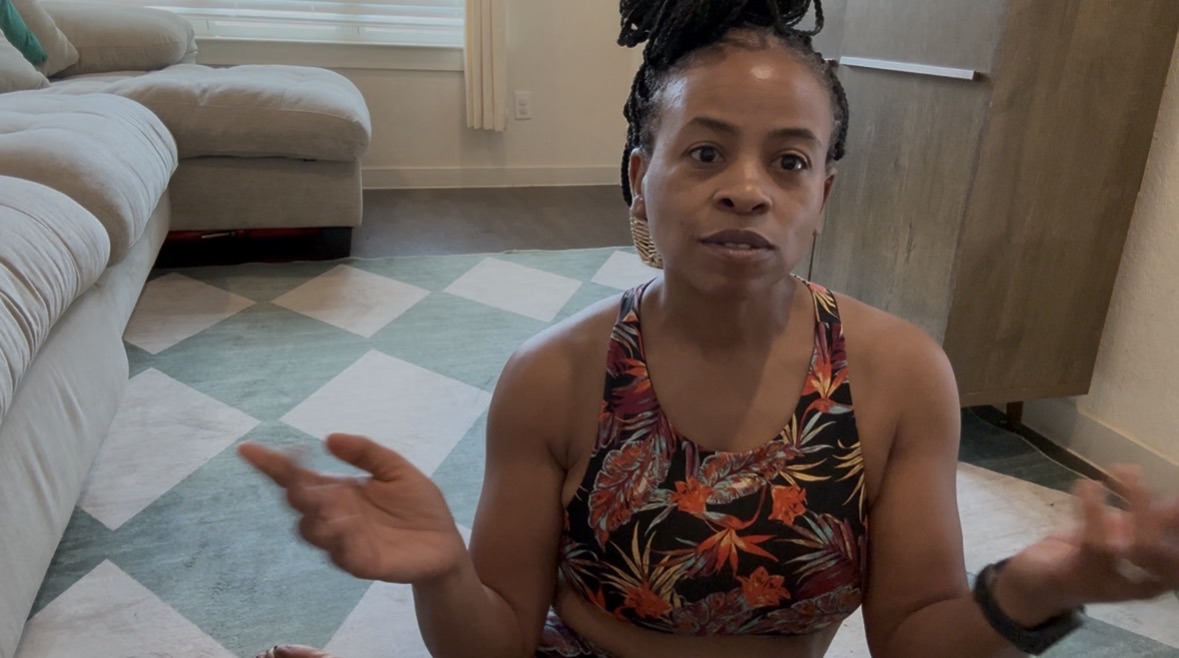
    At Quiet Rebuild Club, I’m building content specifically for the woman who is navigating fitness in the middle of real life not an idealized version of it. That means home workouts filmed in actual living rooms, routines designed for the body you have today (not the one you had at 30), and a community that supports that.

    If you’re in perimenopause and you’re trying to find your way back to movement, you’re in exactly the right place.

    Download the Midlife Rebuild Starter Guide — a 7-day gentle reset designed specifically for women 40+, built around the way your body actually works during hormonal transition. No gym. No pressure. Just a starting point.

    The Bottom Line

    Perimenopause changes how your body responds to exercise but it doesn’t mean you can’t move, rebuild, or feel strong in your body again. It means you need a different approach.

    Less punishment, more intention. Less comparison, more consistency. Less “push through it,” more “this is enough.”

    The woman who does 20 minutes of bodyweight strength in her living room at 9pm, on a day when everything was hard, is doing exactly enough.

    Build in silence. Show up for yourself.

    — Kristie

  • What to Do When You Fall Off Your Fitness Routine

    What to Do When You Fall Off Your Fitness Routine

    This post contains affiliate links. I may earn a small commission at no extra cost to you.

    You haven’t failed. You paused. There’s a difference.

    Maybe it was a week of back-to-back sick kids. A season where work bled into every morning. A stretch where you just… stopped. And now you’re staring at your workout clothes like they belong to a different version of you.

    For me it was becoming a mom and wife while still working, maintaining a household, feeling terrible, looking worse and feeling like I could never keep my head above water.

    I started exercising in my early 20s. I proudly maintained a 65lb weight loss with ease. Then I got pregnant with at 41. I was so afraid that I something bad would happen while I was pregnant so I just sat. No walking, no weights…just sitting. It was also during COVID. Which made it easy. But that sitting continued until I started to realize I had to get up.

    Here’s what I want you to know before we go any further: the gap doesn’t erase the work. It doesn’t mean you’re back at zero. It means you’re human — and you’re still here, still thinking about showing up for yourself. That counts.

    Let’s talk about how to start working out again after a break — without the guilt, without the all-or-nothing pressure, and without turning a restart into another reason to feel behind.

    Having equipment at home is one of the biggest reasons I actually get back on track. No driving, no gym bag. Just step on. [My treadmill — on Amazon →https://amzn.to/4cksEaE.]

    Why Getting Back Feels Harder Than Starting in the First Place

    It might go something like this:

    • You miss a few workouts.

    • You feel guilty about missing the workouts.

    • You think about restarting, then feel overwhelmed about how much “catching up” you have to do.

    • You wait for Monday, the cleared calendar, the motivated feeling.

    • The waiting turns into more weeks off.

    The truth? It can all be undone. Your body remembers more than you think. Muscle memory is real. Consistency you built before is still there. You are not starting over. You are starting again — and those are two completely different things.

    The 3-Step Comeback Method (Simple, Unsexy, Works)

    Just this:

    Step 1: Lower the bar — on purpose.

    Your comeback workout should feel almost too easy. That’s not laziness — that’s strategy. When you make it small enough that you can’t talk yourself out of it, you build the most important thing: the habit of showing up again.

    A 15-minute walk counts. Stretching on the floor while your kids watch TV counts. Ten bodyweight squats before your shower counts. Show up small. Build from there.

    Step 2: Pick one anchor time, not a full schedule.

    Don’t try to map out a perfect five-day plan on day one. Pick one time slot that already exists in your day — early morning before anyone wakes up, during nap time, after dinner — and protect it for just this week.

    One anchor. One week. That’s all you’re committing to.

    Step 3: Log it — even if it was “bad.”

    Write it down. Screenshot it. Check a box. Whatever makes the action feel real and countable. You’re building a streak now — and seeing evidence of showing up matters more than how the workout felt.

    A workout you barely got through still happened. That one still counts.

    What NOT to Do When You’re Restarting

    These are the things that feel motivating but will actually slow you down:

    • Don’t try to “make up for lost time” by going harder than you should. Two weeks off means you ease back in — your joints, tendons, and cardiovascular system need time to recalibrate even if your muscles feel ready.

    • Don’t wait until you feel motivated. Motivation follows action, not the other way around. Start before you feel ready. The feeling comes after you lace up.

    • Don’t compare your week one to someone else’s week forty. You are not behind. You are exactly where a comeback begins.

    • Don’t make a big announce and let the pressure of it become the thing that shuts you down. Just quietly show up first.

    • Don’t skip rest days because you feel like you “haven’t earned” them. Rest is part of the plan, not a reward for the plan.

    A Sample First-Week-Back Workout Schedule

    This is designed for real life — home-based, no equipment needed, low pressure. The goal this week is not performance. It’s presence.

    Day 1 (Monday) — 15-Minute Gentle Reintroduction

    • 5 min: Walk in place or around the block

    • 5 min: Bodyweight squats, wall push-ups, standing hip circles

    • 5 min: Stretching (neck rolls, hip flexors, forward fold)

    Day 2 (Tuesday) — Rest or Light Walk

    Your body is remembering. Let it recover.

    Day 3 (Wednesday) — 20-Minute Move

    • 2 rounds of: 10 squats, 8 push-ups (knees fine), 10 glute bridges, 20-sec plank hold

    • Rest 60 seconds between rounds

    • 5 min cool-down stretch

    Day 4 (Thursday) — Rest

    Day 5 (Friday) — 20-Minute Move (Repeat Wednesday or try a short YouTube follow-along)

    Day 6 (Saturday) — Optional: 20-min walk with kids, a stretch session, or light yoga

    Day 7 (Sunday) — Rest. You showed up this week. That’s the whole win.

    Want a Routine That Fits Into Real Life?

    If you’re figuring out how to fit fitness into a busy mom schedule without overhauling your day, I wrote a whole post on exactly that. It covers how to build a routine that bends instead of breaks — which is exactly what you need right now.

    Read it here: How to Fit Fitness Into a Busy Mom Schedule

    Ready to rebuild — quietly, at your own pace?

    The Quiet Rebuild Starter Guide walks you through exactly how to get back to movement without the pressure or the all-or-nothing thinking. It’s free — because you deserve a starting point that doesn’t feel like a test.

    → Grab the free Quiet Rebuild Starter Guide here.

    You paused. Now you’re pressing play again. That’s it — that’s the whole story.

    Build in silence. Show up for yourself.

  • How to Get Back Into Fitness When You’re Exhausted | Quiet Rebuild Club

    How to Get Back Into Fitness When You’re Exhausted | Quiet Rebuild Club

    This post contains affiliate links. I may earn a small commission at no extra cost to you.

    There’s a version of fitness advice that tells you exhaustion is a mindset problem. That if you just woke up earlier, drank more water, or wanted it badly enough, you’d find the energy.

    I’m not going to tell you that.
    Because if you’re a mom reading this at 10pm after a full day of everything — or at 5am before everyone wakes up — you don’t need a pep talk. You need permission. And you need workouts that actually work for the version of you that exists right now, not the one who has eight hours of sleep and a quiet house.


    Exhaustion isn’t an excuse. It’s a signal. It’s your body asking you to pay attention. And the answer isn’t to push through at full intensity. The answer is to show up differently.
    That’s what Quiet Rebuild is about.


    The Real Reason Moms Fall Off (And Why It’s Not What You Think)


    Here’s the honest version: most moms don’t fall off because they’re lazy. They fall off because the fitness plan they were following was designed for someone else’s life.

    A 60-minute workout when you have 20 minutes. A gym routine when you can’t leave the house. A meal plan that requires you to cook something separate from what everyone else is eating. None of it fits, so eventually — you stop.


    And then comes the guilt. The “I’ll start again Monday.” The feeling that you’ve failed at something that was already set up to fail you.
    You didn’t fall off. You outgrew a plan that never really fit.


    What actually works is something sustainable. Something that looks like your life, not a highlight reel. That means home workouts that count even when they’re short. Movement that fits in the margins. And a standard for “showing up” that doesn’t require perfection to qualify.


    5 Low-Energy Home Workouts for Tired Moms That Still Count


    These aren’t watered-down versions of real workouts. These are real workouts — designed for when your tank is low but you still want to move.

    1. The Floor Stretch + Activation Combo (10 min)
      Lay on the floor. That’s step one. From there: hip circles, cat-cow, glute bridges, dead bugs. You never have to stand up if you don’t want to. This counts. Your body gets blood moving, your hips get some relief from sitting, and your nervous system gets a moment to regulate. On exhausted days, this is often enough.
    2. The Walk (Any Length)
      A 10-minute walk around the block is a workout. A 20-minute walk while your kid scooters next to you is a workout. This isn’t settling — walking is genuinely one of the most effective low-impact movements for stress, mood, and consistency. The best part: it requires almost nothing from you.
    3. The 4-Move Bodyweight Circuit (15 min)
      Pick four moves. Squats, push-ups (on your knees if needed), a hinge (deadlift or good morning), and a core hold. Do each for 40 seconds, rest 20. Repeat three rounds. That’s it. No equipment, no setup, no complicated programming. Just enough structure to feel like you did something — because you did.
    4. Slow Resistance (20 min with light weights or bands)
      When you’re tired, heavy lifting isn’t the move. But slow, controlled resistance work — bicep curls, lateral raises, banded squats, seated rows — is something your body can usually handle even when your energy is low. Keep the weights light, the pace slow, and focus on actually feeling the muscle work. This is underrated for exhausted days.
    5. The 10-Minute Treadmill (Walk/March in Place if needed)
      No treadmill? March in place. The goal here isn’t pace or distance — it’s just warming your body up and getting out of your own head for 10 minutes. Put on a podcast, your favorite playlist, or just the silence. Movement changes your state. Even a little.

    The 10-Minute Rule Explained


    Here’s the rule: if you do 10 minutes, it counts.

    That’s it.
    Not “it counts if you finish the whole workout.” Not “it counts if you push past 10 minutes.” 10 minutes in, you did it.
    This isn’t about lowering your standards. It’s about removing the all-or-nothing thinking that makes most people quit altogether. The science backs it up too — short bouts of movement still improve cardiovascular health, mood, and energy over time. But more importantly, the habit of starting is worth more than any single workout.

    Some days a 10-minute walk is all I’ve got. I literally step on my treadmill in pajamas. [Here’s the one I use if you’re looking →https://amzn.to/3QwswMx.]


    When you show up for 10 minutes on a hard day, you’re training something more important than your body. You’re training the version of yourself that knows she shows up even when it’s hard. That person is the one who actually makes lasting change.

    If this is hitting close to home, I made something for you. The free Quiet Rebuild Starter Guide is a no-pressure starting point for exactly where you are right now. No intense program. No guilt. Just a quiet way back in. Get it here → Free Starter Guide


    What “Showing Up” Actually Looks Like on Hard Days


    Showing up doesn’t always look like a sweaty, proud workout selfie. Sometimes it looks like:
    ∙ Doing 10 minutes of stretching on the living room floor while your kid watches a show
    ∙ Walking to the mailbox and back — and deciding to keep going a little longer
    ∙ Doing three sets of something while dinner is in the oven
    ∙ Putting on your workout clothes even if the workout doesn’t happen (momentum is real)
    ∙ Lying on the floor and doing literally four glute bridges before giving yourself full credit
    Showing up is about your relationship with movement, not your performance in any single session. Some days the workout is 45 minutes and you feel unstoppable. Some days it’s 8 minutes and you’re proud of yourself for not skipping entirely.
    Both are wins. Both count. Both are part of a body of work you’re building — quietly, consistently, in the margins of a full life.
    That’s Quiet Rebuild.


    Ready to Start Where You Are?


    If this feels like the kind of fitness approach you’ve been looking for — the kind that meets you in real life instead of demanding you show up to someone else’s version of it — the Quiet Rebuild Starter Guide is the place to begin.
    It’s free. It’s designed for exactly this: low pressure, real movement, built for moms who are tired of starting over.
    👉🏽 Grab the free Quiet Rebuild Starter Guide →

    How to Get Back Into Fitness When You’re Exhausted | Quiet Rebuild Club