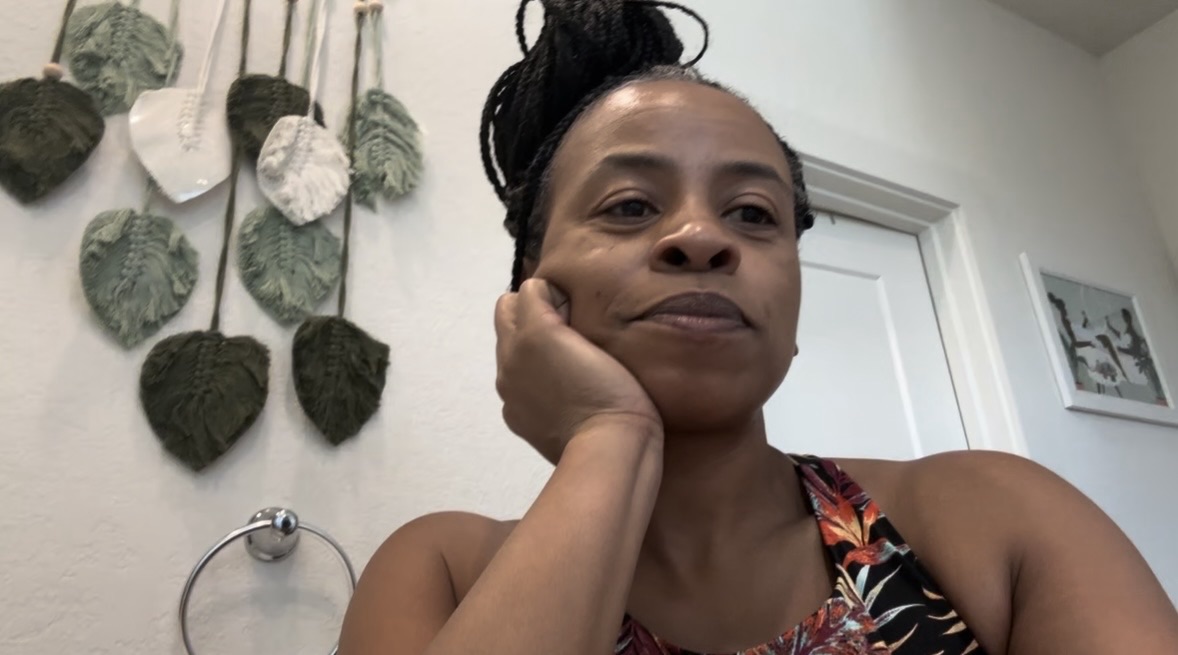
If you’ve ever wondered what a “typical day” looks like for just being a woman in her forties trying to keep it together.
The honest answer is that it’s not glamorous. There’s no perfect anything; the kitchen is a mess, clothes still need to be folded, money still needs to be made and my family still needs me. I wouldn’t have it any other way.
That’s why I protect my mornings because there will always be something.
My mornings start with a 5am alarm, a body that doesn’t always cooperate, and a lot of small, unremarkable decisions that somehow add up to a life that feels like mine again.
I filmed a mini walk-through of my morning routine this weekend. The real one, not the highlight version. Then I sat down afterward to talk through where The Restart series is headed, plus a shift I made recently that’s genuinely changed how my mornings feel. It’s not a hack. It’s not a five-step system. It’s smaller than that, and maybe that’s why it’s actually stuck.
If you’ve been following along with The Restart, this one connects some dots on where the series is going next. And if you’re just here for the “does anyone else’s mornings look like this” solidarity; that’s here too.
On Sunday, I dropped a YouTube video and started talking about my latest perimenopause symptom. I had no intention on bringing it up. But before I knew it, it came right out of my mouth.
Excessive peeing…that’s the latest symptom to appear in this wonderful journey of midlife. 🙃
Originally, I thought it was me. Or that maybe I was drinking more liquids. I slowed down on the liquids and determined that I hadn’t lost it. I was definitely going more than usual.
In true Kristie fashion; I took to the net to find out if excessive peeing and perimenopause are related. And the answer was, “yep!” It’s more to it but basically the lining of the bladder is thinner due to hormones. Also, found out there are three things that exasperate it.
Caffeine
Alcohol
Carbonation
So, if you’re experiencing excessive peeing in perimenopause. You might was to consider cutting these out. We’ll talk more about that on another day.
If you haven’t started the Restart Series than you might want to go there after this. It’s an 8 week series with tips and routines to help you navigate perimenopause and get back into fitness. This week is Week 7. It’s almost over.
Last week, I mentioned in a video that I was gifted a Perimenopause Support Pack and Protein Pack from Perelel. I’ve been using both products for a week. So far it’s been going great. I go into full detail in the video below. Plus, you can get 15% off your purchase of you use the code: Kristie15 at checkout at Perelel Health .
This post contains affiliate links. If you purchase through my link, I may earn a small commission at no extra cost to you.
This post contains affiliate links. I may earn a small commission at no extra cost to you.
You’re doing everything right. You’re showing up. You’re pushing through. You’re working out more than you ever have and somehow your body isn’t responding the way it used to.
If that’s you, you are not doing it wrong. Your body is doing something different.
Once I understood what was actually happening in my own body after 40, everything changed. I mean I knew it was coming. I watched my mom go through hot flashes and laugh. She used to say she was, “going through the change.” I didn’t understand it then but I definitely do now. “The change” is very accurate.
The body changes were already happening at 40 but it didn’t really hit me until around 45. That’s when I really started to notice that things weren’t changing as fast as they used to. Not because I wasn’t working out hard enough, but because I finally stopped trying to.
Your Body After 40 Is Playing by Different Rules
Here’s the thing nobody tells you when you hit your 40s: the workouts that used to work can actually start working against you.
I’ve been doing some research on the why and how. And by research I mean Google and what I found was interesting.
When we push really hard like with super long cardio sessions, back-to-back intense workouts, without taking any rest; our bodies release a stress response. That stress response is normal. It’s how we get stronger.
But after 40, especially if you’re in perimenopause or heading that direction, your body has a harder time recovering from that stress. It stays in that heightened state longer. When that happens, your body actually holds onto weight, especially around the stomach. You feel more tired, not less. You’re sore longer. Your sleep gets worse. Sometimes it feels like you’re working harder and feeling worse and it makes no sense. Until you understand what’s happening.
More Is Not Always More
I used to think the answer was always to do more. More reps. More days. More intensity. Push through the tired. Earn the rest. That mindset hasn’t served me after lately. Although I do admit that I never take a full rest day. I’m not there yet. Even if it’s a 2 mile walk around the neighborhood; I’m moving daily. The feeling I get after a sweat session never gets old. Stress and worry is always gone when I’m done moving.
This consistency of movement I built up is why I like to move daily. What actually started helping me was just doing it consistently. Shorter workouts sometimes. More rest between sets. Strength training instead of only long cardio. And honestly? More sleep.
Sleep has been a game changer! My 5am workouts are greatly affected by the time I go to bed the night before.
Magnesium is also supposed to help with perimenopause symptoms. It’s said to help with sleep, hot flashes, muscles cramps and more. I just ordered this one from Amazon if you want to try it with me. I’ll get back to you on how it makes me feel after I’ve tried it for a bit.
I also made a whole YouTube video about movements. It’s a Perimenopause Workout: Effective Strength Routine You Can Do at Home. I walk you through five moves you can do instead of grinding through high-intensity sessions. You can do them alone or add them to your current plan. It’s real, it’s simple, and it’s built for the body we actually have right now. Go watch it. Then come back here.
A Simple Week That Actually Works
This is roughly what a week can look like:
• Monday — 20-minute strength (lower body focus) • Tuesday — 20-minute walk • Wednesday — 20-minute strength (upper body focus) • Thursday — rest • Friday — full body (strength & cardio) • Weekend — movement that feels good like playing at the park with the kids, shopping with friends, neighborhood walk, hikes, etc; no pressure Some weeks look exactly like that. Some weeks Monday becomes Wednesday and Friday disappears entirely. That’s okay. Showing up imperfectly is still showing up. Consistency is key. Once you get a flow, you can build upon that. (If you choose to.)
If you want a gentle place to start, my Quiet Rebuild Starter Guide is free and gives you a simple framework to build from and there’s no gym required.
And if you’re specifically navigating perimenopause or menopause, I also have a 7-Day Midlife Reset Guide built specifically for where you are right now.
You Don’t Have to Earn Rest
The biggest shift for me wasn’t a new workout. It was giving myself permission to stop treating rest like a failure. And I’m still working on it.
Just know that…you are not behind. You are not broken. Your body is changing, and it’s asking you to change with it not fight it. Work smarter. Rest on purpose. Show up consistently. That’s the whole thing.
If this resonated with you, save it, share it with a friend who needs to hear it, and come find me on Instagram @quietrebuildclub and @KristieRebuilds on YouTube. I post real workouts, real life, no pressure.
Affiliate disclosure: This post contains affiliate links. If you purchase through my links, I may earn a small commission at no extra cost to you. I only recommend things I actually use.