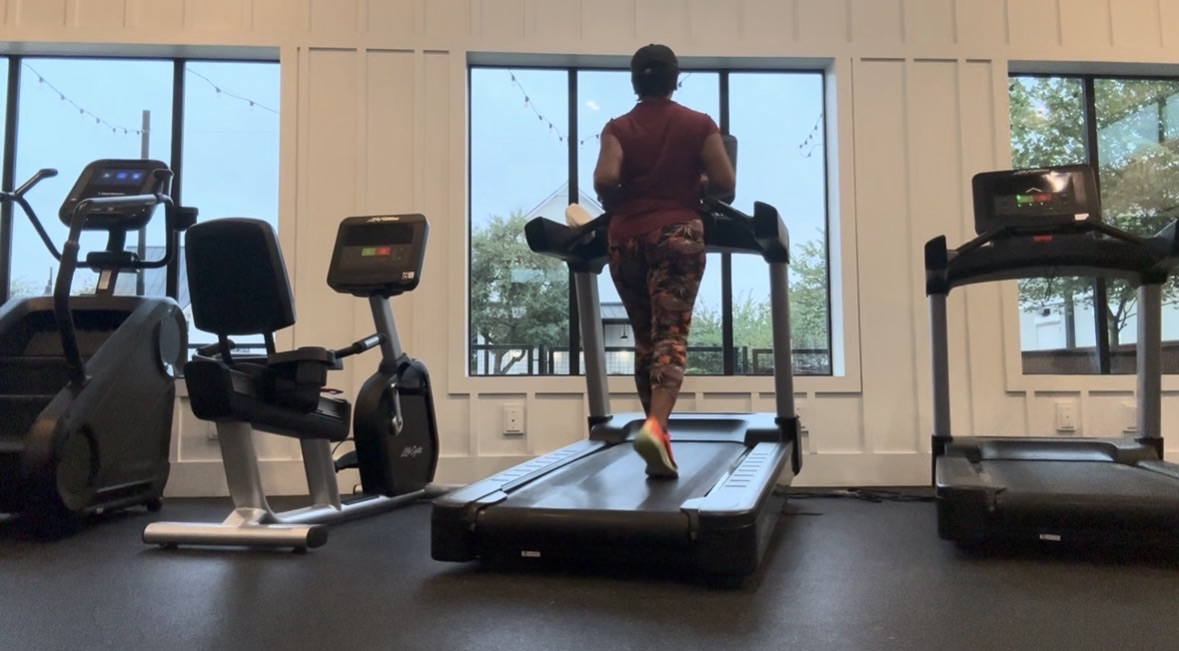
Category: Fitness

  • The Difference Between Tired and Overtrained (And Why It Matters in Perimenopause)

    The Difference Between Tired and Overtrained (And Why It Matters in Perimenopause)


    There’s a version of fitness advice that says: push through. Show up no matter what. No excuses.

    And then there’s the reality of being a woman in perimenopause. Where some days, “pushing through” is the worst thing you can do for your body.

    Here’s the thing nobody tells you: tired and overtrained are not the same thing. One is a signal to keep going. The other is a signal to stop. Learning the difference might be the most useful thing you do for your fitness this year.


    Why This Matters More After 40

    During perimenopause, your cortisol levels, your body’s primary stress hormone, are already running higher than they used to. Add a hard workout on top of that, and you’re not building strength. You’re adding stress to an already stressed system.

    (If you missed last week’s post on cortisol and exercise, that’s a good place to start.)

    This doesn’t mean you shouldn’t work out. It means you need to be smarter about when to push and when to pull back. And that starts with knowing what you’re actually feeling.


    Signs You’re Overtrained (Stop. Rest. Today.)

    These are signals your body is asking for more than a good night’s sleep:

    • Joint pain. Not muscle soreness, actual joint pain.
    • You wake up exhausted after 7+ hours of sleep. Rest isn’t restoring you.
    • Your mood has crashed. Feeling irritated with low motivation and feeling emotionally fragile.
    • You’re dreading workouts you used to enjoy. Not just “don’t feel like it,” but actual dread
    • Headache when you wake up. Your nervous system is overtaxed

    If you’re checking two or more of these, today is a rest day. No negotiation.


    Signs It’s Safe to Keep Going (Modified, If Needed)

    These are not reasons to skip. These are the normal friction of a real fitness routine:

    • Low motivation and you just don’t feel like it.
    • Normal muscle soreness. The kind that eases once you start moving.
    • You slept okay but feel a little sluggish.
    • You’re stressed but not depleted.
    • You haven’t moved in two or more days.

    These are go-slowly signals. A 20-minute walk counts. A modified version of your planned workout counts. Showing up in a smaller way still counts.


    The Rule Worth Keeping

    Pain is a stop signal. Discomfort is a go-slowly signal. Low motivation is not a signal; it’s noise.

    Print that out if you need to. Save it on your phone. It will save you from both overtraining and from talking yourself out of workouts that would actually help.


    What Helps When You’re Genuinely Depleted

    • Prioritize sleep over the workout. A consistent wake time regulates your system more than any workout.
    • Gentle movement only: a slow walk, stretching, or the 5-minute wind-down from the rest protocol.
    • Check what’s depleting you outside of exercise. Stress, under-eating, poor sleep all count as load on your system

    Want the full rest and recovery protocol built for the perimenopausal body? It’s inside the Quiet Rebuild Starter Kit; including exactly when to rest, when to push, and how to do a 5-minute wind-down after every workout.


    If you’re ready for a full structured plan that works with your hormones instead of against them, the 7-Day Midlife Reset Guide walks you through exactly what to do — day by day, with the rest days built in. It’s $27, or $47 with the lots of extras.

    Because consistency isn’t about pushing harder. It’s about showing up smarter.


    Build in silence. Show up for yourself.
    — Quiet Rebuild Club · quietrebuildclub.com

  • Strength Training During Perimenopause: The 3 Moves I Do When Hot Flashes, Low Energy, and a Busy Schedule All Hit at Once

    Strength Training During Perimenopause: The 3 Moves I Do When Hot Flashes, Low Energy, and a Busy Schedule All Hit at Once

    There’s a particular kind of exhausted that hits in your 40s that nobody really prepares you for.
    It’s not the tired-from-a-bad-night’s-sleep kind. It’s the woke-up-already-drained, hot-at-2am, body-feels-different-than-it-did-two-years-ago kind. The kind where you want to move your body but every workout you try feels like it was designed for someone ten years younger and three hormone cycles behind you.


    I know that feeling because I’ve been in it. Just last night, I woke up five times from hot flashes. I know what the internet tells you to do: more cardio, sweat it out, push harder. I tried that and didn’t see results anymore.

    But here’s what nobody told me… that advice was actually working against me because of perimenopause. The research is clear, and once I understood it, everything about how I approach my workouts changed.


    The answer isn’t more cardio. Although, I still do cardio. But the real sauce is strength training. It doesn’t have to be complicated, heavy, or long.

    Why Strength Training Is the Most Important Thing You Can Do During Perimenopause

    Estrogen decline begins years before your last period, often in your late 30s or early 40s. Your body loses its natural muscle-preservation support system. Estrogen plays a direct role in maintaining muscle mass and bone density. When it drops, both drop with it, often faster than you’d expect.


    This is why so many women in perimenopause notice weight redistribution (especially around the midsection), reduced energy, and a sense that their body composition is changing even when nothing in their diet or routine has. It’s not a willpower problem. It’s hormonal physiology.


    Strength training directly addresses this. Lifting even light weights signals your body to preserve and build lean muscle, which:


    • Increases your resting metabolic rate (so your body burns more calories at rest)
    • Supports bone density at a time when it’s most at risk
    • Improves insulin sensitivity, which reduces fat storage around the belly
    • Regulates mood and sleep through the release of endorphins and growth hormone
    • Reduces the severity of perimenopause symptoms over time


    The research isn’t subtle on this. A 2022 study published in Menopause: The Journal of The Menopause Society found that resistance training significantly improved body composition, muscle strength, and quality of life in perimenopausal women without requiring high intensity.


    Low impact does not mean low effort. It means smart effort.

    What My Workouts Look Like on a Hard Hormone Day


    I’ll be honest with you. There are days where a 45-minute workout is just not happening. Hot flash at 3am, my son needs things before I’ve had coffee, the general weight of everything and some days the most I can commit to is increments of 15 minutes and three moves.


    Those days, this is what I do.


    Three moves. Weights in hand. Done in under 20 minutes including rest. And every single one of them is directly relevant to what your body needs during perimenopause.

    The 3 Moves

    1. Dead Bug with Weights
      The dead bug is one of those exercises that looks gentle and absolutely is not. It’s a deep core stability exercise that protects your lower back, strengthens your transverse abdominis (the deep stabilizing muscle that wraps around your spine), and challenges coordination in a way that keeps your nervous system engaged.
      During perimenopause, core strength is more important than most people realize. Hormonal shifts affect ligament laxity and joint stability. your core is what compensates for that. A strong core also supports better posture, reduces back pain, and helps regulate intra-abdominal pressure.
      How to do it:
      Lie on your back with your knees bent at 90 degrees, shins parallel to the floor. Hold a light weight in each hand and extend your arms straight up toward the ceiling. Slowly lower your right arm back toward the floor while simultaneously extending your left leg straight out — hovering both just above the ground. Return to center. Then lower your left arm and right leg. That’s one rep.
      Go slow. The slower you go, the harder it works. Keep your lower back pressed into the mat throughout.
      Equipment: Light dumbbells, 3–8 lbs depending on where you are.
      AmazonBowflex SelectTech Adjustable Dumbbells or CAP Barbell Neoprene Dumbbell Set
    1. Alternating Reverse Lunge with Weights
      The reverse lunge is a single-leg movement, which means it trains balance, hip stability, and unilateral (one-sided) strength simultaneously. For perimenopausal women, this is crucial — single-leg movements help prevent the muscle imbalances that can lead to knee and hip problems as we age.
      The reverse lunge is also significantly more joint-friendly than a forward lunge. The movement pattern reduces shear force on the knee, making it accessible even on days when your joints feel sore or inflamed (which, thanks to estrogen’s anti-inflammatory role declining, is more common in perimenopause than most people expect).
      Lower body strength is your metabolic engine. The more muscle you have in your legs and glutes, the higher your resting metabolic rate — and the more effectively your body manages blood sugar and weight.
      How to do it:
      Stand tall holding a weight in each hand at your sides. Step your right foot back and lower your right knee toward the floor, keeping your front shin as vertical as possible and your chest up. Press through your left heel to return to standing, then bring your right foot back to meet your left. Alternate sides with each rep.
      Equipment: Medium dumbbells, 8–15 lbs. Start lighter than you think you need to.
      Amazon — Yes4All Vinyl Coated Dumbbells or Yes4All Adjustable Dumbbells
    2. Bent-Over Row with Weights
      Upper body pulling movements are criminally underrepresented in most women’s fitness content, and it costs us. The bent-over row strengthens your upper back, rear deltoids, and biceps — the muscles responsible for posture, shoulder stability, and counteracting the forward rounding that happens when we’re hunched over phones, kids, and desk work all day.
      During perimenopause, back health becomes even more critical as bone density in the spine begins to decline. Strengthening the muscles that support the spine directly helps protect it. Strong upper back muscles also help prevent the postural changes that become more common as estrogen drops.
      How to do it:
      Hinge forward at the hips with a soft bend in your knees, keeping your back flat and your core engaged. Let the weights hang in front of you. Drive your elbows back and up, squeezing your shoulder blades together as you pull the weights toward your lower ribcage. Lower with control. That’s one rep.
      Don’t rush this one. The lowering phase (the eccentric) is where a significant portion of the muscle-building stimulus happens.
      Equipment: Medium dumbbells, 10–20 lbs depending on your current strength.
      Amazon Basics Rubber Encased Hex Dumbbells or Bowflex SelectTech 552

    A Sample Workout for a Hard Hormone Day
    This is the actual workout. No warm-up theatrics, no 47-step routine. Just movement.
    Do 3 rounds:
    • Dead Bug with Weights — 8 reps (4 each side)
    • Up Downs — 10 reps (5 each side)
    • Bent-Over Row — 10 reps
    • Rest 60 seconds between rounds
    Total time: 15–20 minutes.
    On a good energy day, add a fourth round or increase your weights slightly. On a low energy day, two rounds still counts. You still showed up.

    What to Expect When You Start Strength Training in Perimenopause
    The first two to three weeks, your body is learning the movements. Don’t expect to feel dramatically different immediately. What you will notice fairly quickly is better sleep quality (strength training improves deep sleep stages), reduced anxiety, and a general sense of having done something good for yourself.
    Over six to eight weeks, you’ll start to notice changes in how your body feels — more stability, less joint soreness, more energy on non-workout days. The hormonal benefits compound over months, not days. Consistency is the whole game here.
    You don’t need to lift heavy. You don’t need to train five days a week. You need to show up consistently with weights in your hands and give your body the signal it needs: build muscle, preserve bone, stay strong.

    One More Thing
    If you’re navigating perimenopause and trying to figure out where to start, I put together a 7-Day Gentle Reset specifically for women 40+. It’s built around the same principles as this post… low impact, strength-focused, designed around how your body actually works right now.

    The Quiet Rebuild Starter Guide is your entry point into the full QRC method. Real workouts, real mom life, no pressure.
    Download the free Quiet Rebuild Starter Guide here: Get the Starter Guide

    And if you’re ready to go deeper the grab the Midlife Rebuild Starter Guide here: Midlife Starter Midlife Starter Guide

    You don’t have to work harder. You have to work smarter, with a body you understand. That’s what we’re building here.
    — Kristie

    Related posts you might like:
    Home Workouts for Perimenopause: How to Move Your Body When Everything Feels Different
    4 Quiet Fitness Moves You Can Do at Home (No Equipment Needed)
    How to Get Back Into Fitness When You’re Exhausted

    This post contains affiliate links. If you purchase through my links, I may earn a small commission at no extra cost to you. I only recommend products I personally use and trust.

  • Why Working Out Harder Isn’t Working After 40 (Like It Used To) It’s Your Cortisol

    Why Working Out Harder Isn’t Working After 40 (Like It Used To) It’s Your Cortisol

    This post contains affiliate links. I may earn a small commission at no extra cost to you.

    You’re doing everything right. You’re showing up. You’re pushing through. You’re working out more than you ever have and somehow your body isn’t responding the way it used to.


    If that’s you, you are not doing it wrong. Your body is doing something different.

    Once I understood what was actually happening in my own body after 40, everything changed. I mean I knew it was coming. I watched my mom go through hot flashes and laugh. She used to say she was, “going through the change.” I didn’t understand it then but I definitely do now. “The change” is very accurate.

    The body changes were already happening at 40 but it didn’t really hit me until around 45. That’s when I really started to notice that things weren’t changing as fast as they used to. Not because I wasn’t working out hard enough, but because I finally stopped trying to.

    Your Body After 40 Is Playing by Different Rules

    Here’s the thing nobody tells you when you hit your 40s: the workouts that used to work can actually start working against you.

    I’ve been doing some research on the why and how. And by research I mean Google and what I found was interesting.


    When we push really hard like with super long cardio sessions, back-to-back intense workouts, without taking any rest; our bodies release a stress response. That stress response is normal. It’s how we get stronger.


    But after 40, especially if you’re in perimenopause or heading that direction, your body has a harder time recovering from that stress. It stays in that heightened state longer. When that happens, your body actually holds onto weight, especially around the stomach. You feel more tired, not less. You’re sore longer. Your sleep gets worse. Sometimes it feels like you’re working harder and feeling worse and it makes no sense. Until you understand what’s happening.

    More Is Not Always More


    I used to think the answer was always to do more. More reps. More days. More intensity. Push through the tired. Earn the rest.
    That mindset hasn’t served me after lately. Although I do admit that I never take a full rest day. I’m not there yet. Even if it’s a 2 mile walk around the neighborhood; I’m moving daily. The feeling I get after a sweat session never gets old. Stress and worry is always gone when I’m done moving.


    This consistency of movement I built up is why I like to move daily. What actually started helping me was just doing it consistently. Shorter workouts sometimes. More rest between sets. Strength training instead of only long cardio. And honestly? More sleep.

    Sleep has been a game changer! My 5am workouts are greatly affected by the time I go to bed the night before.

    Magnesium is also supposed to help with perimenopause symptoms. It’s said to help with sleep, hot flashes, muscles cramps and more. I just ordered this one from Amazon if you want to try it with me. I’ll get back to you on how it makes me feel after I’ve tried it for a bit.


    I also made a whole YouTube video about movements. It’s a Perimenopause Workout: Effective Strength Routine You Can Do at Home. I walk you through five moves you can do instead of grinding through high-intensity sessions. You can do them alone or add them to your current plan. It’s real, it’s simple, and it’s built for the body we actually have right now.
    Go watch it. Then come back here.

    A Simple Week That Actually Works


    This is roughly what a week can look like:


    • Monday — 20-minute strength (lower body focus)
    • Tuesday — 20-minute walk
    • Wednesday — 20-minute strength (upper body focus)
    • Thursday — rest
    • Friday — full body (strength & cardio)
    • Weekend — movement that feels good like playing at the park with the kids, shopping with friends, neighborhood walk, hikes, etc; no pressure
    Some weeks look exactly like that. Some weeks Monday becomes Wednesday and Friday disappears entirely. That’s okay. Showing up imperfectly is still showing up. Consistency is key. Once you get a flow, you can build upon that. (If you choose to.)


    If you want a gentle place to start, my Quiet Rebuild Starter Guide is free and gives you a simple framework to build from and there’s no gym required.


    And if you’re specifically navigating perimenopause or menopause, I also have a 7-Day Midlife Reset Guide built specifically for where you are right now.

    You Don’t Have to Earn Rest


    The biggest shift for me wasn’t a new workout. It was giving myself permission to stop treating rest like a failure. And I’m still working on it.


    Just know that…you are not behind. You are not broken. Your body is changing, and it’s asking you to change with it not fight it.
    Work smarter. Rest on purpose. Show up consistently. That’s the whole thing.

    If this resonated with you, save it, share it with a friend who needs to hear it, and come find me on Instagram @quietrebuildclub and @KristieRebuilds on YouTube. I post real workouts, real life, no pressure.

    Related posts you might like:
    Home Workouts for Perimenopause: How to Move Your Body When Everything Feels Different
    What to Do When You Fall Off Your Fitness Routine
    How to Get Back Into Fitness When You’re Exhausted

    Affiliate disclosure: This post contains affiliate links. If you purchase through my links, I may earn a small commission at no extra cost to you. I only recommend things I actually use.

  • Home Workouts for Perimenopause: How to Move Your Body When Everything Feels Different

    Home Workouts for Perimenopause: How to Move Your Body When Everything Feels Different

    You didn’t change. Your body did.

    You’ve been here before. Building a routine, feeling good in your body, showing up consistently. And then something shifted. The energy during your workouts don’t feel the same anymore. The weight you’ve always managed started collecting somewhere new. You’re waking up at 3am, dragging through 2pm, and wondering if you’re imagining the fact that everything is harder than it used to be.

    You’re not imagining it. And you’re not alone.

    My workouts during my 20s and 30s were easy. Almost instant results and energy that would last for days.

    But perimenopause changed all of that.

    Now that I’m in my 40s; the results seem to take longer, aren’t the same and the energy is unpredictable. I’ve spent so much time wondering what was going on with me. But after many conversations and research; I was able to get down to the bottom of it.

    Perimenopause and menopause changes how your body responds to exercise. The good news is that movement is one of the most powerful tools you have during this transition. The better news is that you don’t need a gym, a complicated program, or more energy than you actually have. You just need the right kind of movement, built around the body you have right now.

    This guide covers everything you need to know about home workouts for perimenopause: why your body is responding differently, what types of exercise actually help, and how to build a gentle, realistic routine that works with your hormones.

    Why Exercise Feels Different During Perimenopause

    Before we get to the workouts, it helps to understand what’s actually happening in your body. Perimenopause typically begins in the early-to-mid 40s, though it can start earlier, and it’s defined by fluctuating and eventually declining levels of estrogen and progesterone.

    Here’s what that means for your body during exercise:

    • Energy fluctuates more than it used to. A workout that felt manageable last week might feel impossible this week. That’s a hormonal reality, not a lack of willpower.

    • Recovery takes longer. Declining estrogen affects how quickly muscles repair after exercise. High-intensity workouts that once bounced back in 24 hours might need 48–72 now.

    • Your metabolism is shifting. Hormonal changes lower your resting metabolic rate and increase how quickly fat is stored, especially around the midsection — even if you haven’t changed what you eat.

    • Muscle and bone need more attention. Estrogen helps maintain both. As levels drop, muscle mass and bone density can decline faster. Strength training becomes more important than ever during this window.

    • Heat tolerance decreases. Hot flashes and night sweats affect your internal thermostat. High-intensity cardio can trigger or worsen symptoms for some women.

    When you know why your body is responding the way it is, you can stop fighting it and start working with it.

    The 5 Keywords I Researched and Why They Matter for You

    If you’ve been searching for answers and finding nothing that quite fits, here’s why: most fitness content isn’t built for perimenopause. It’s built for younger bodies or post-menopausal women. I was doing the same workout I did in my 20s and 30s but the results weren’t the same. I was looking for answers. And found that we are in a specific window with specific needs.

    What Type of Exercise Actually Helps During Perimenopause

    Not all exercise has the same effect during perimenopause. Here’s a breakdown of what the research supports and what that looks like in a real home workout:

    Strength Training: Your Most Important Tool

    Strength training; using bodyweight, resistance bands, or light dumbbells. It is the single most well-supported form of exercise for women in perimenopause. Research consistently shows it helps preserve muscle mass, slow bone density loss, improve metabolic rate, and reduce body fat, especially around the midsection.

    You don’t need heavy weights or a gym. Bodyweight squats, glute bridges, modified push-ups, and resistance band rows are all strength training. Aim for 2–3 sessions per week, working all major muscle groups.

    Low-Impact Cardio: Consistency Over Intensity

    Cardio remains one of the most recommended forms of cardio for women in perimenopause. I swear by it. Even 10–20 minutes counts.

    It doesn’t have to be jogging or running. Cycling and swimming are also good options. The goal is movement that elevates your heart rate.

    Mind-Body Movement: Often Overlooked, Genuinely Powerful

    Yoga, Pilates, and stretching aren’t “less than” strength training during perimenopause. They help to support a body that is navigating sleep disruption, mood fluctuation, and physical stress. Research shows mind-body practices can improve sleep quality, reduce anxiety, and support bone mineral density.

    And on the days when your body has a limit of 15 minutes and a yoga mat: that counts. It always counts.

    Rest: Not Optional, Actually Productive

    This is the hardest for me. Recovery is part of the training. During perimenopause, your body needs more recovery time between intense efforts. Building intentional rest into your week isn’t giving up; it’s smart. Rest might not be taking a full day off. Maybe you took a walk instead of running or a high intensity run.

    A Simple Home Workout Structure for Perimenopause

    You don’t need a complicated program. You need a structure that is realistic for real life that includes busy days, low-energy days, hot-flash days, and everything in between. Here’s a simple weekly framework:

    • 2–3 days: Strength-focused. 15–30 minutes. Bodyweight or light resistance. Focus on glutes, legs, back, and core. Rest at least one day between sessions.

    • 2 days: Cardio. A walk, jog, yoga, stretching, or a short low-impact session on low-energy days.

    • 2 days: Rest. Actual rest. Sleep, hydration, and letting your body recover.

    The most important part of this framework? It’s built around what’s actually possible. Not what’s ideal on paper. A 15-minute workout at 9pm after the kids are asleep counts exactly the same as a workout you planned for 6am. The one you actually do is always the right one.

    Ready to follow a done-for-you plan?
    The 7-Day Midlife Reset is a gentle workout guide built specifically for women in perimenopause and menopause. Low impact, home-based, no equipment. Seven days of workouts you can start tonight.
    → Download instantly for $17 👉🏽 7 Day Midlife Reset

    What to Stop Doing (Or Do Less Of)

    This isn’t about what you can’t do. It’s about what’s working harder against your body than for it right now:

    • Punishing yourself for rest days. Rest is not failure. It is literally part of how your body rebuilds.

    • Comparing your current capacity to a past version of yourself. Your body at 44 or 48 or 52 is not failing to be 32. It’s navigating a different hormonal reality. (This was a hard one for me to let go of.)

    • Skipping strength training in favor of cardio only. For perimenopausal weight changes and bone health, this is the most common mistake. Cardio matters but strength training is non-negotiable during this window.


    The Quiet Rebuild Approach to Perimenopause Fitness

    At Quiet Rebuild Club, I’m building content specifically for the woman who is navigating fitness in the middle of real life not an idealized version of it. That means home workouts filmed in actual living rooms, routines designed for the body you have today (not the one you had at 30), and a community that supports that.

    If you’re in perimenopause and you’re trying to find your way back to movement, you’re in exactly the right place.

    Download the Midlife Rebuild Starter Guide — a 7-day gentle reset designed specifically for women 40+, built around the way your body actually works during hormonal transition. No gym. No pressure. Just a starting point.

    The Bottom Line

    Perimenopause changes how your body responds to exercise but it doesn’t mean you can’t move, rebuild, or feel strong in your body again. It means you need a different approach.

    Less punishment, more intention. Less comparison, more consistency. Less “push through it,” more “this is enough.”

    The woman who does 20 minutes of bodyweight strength in her living room at 9pm, on a day when everything was hard, is doing exactly enough.

    Build in silence. Show up for yourself.

    — Kristie

  • 4 Quiet Fitness Moves You Can Do at Home (No Equipment Needed)

    4 Quiet Fitness Moves You Can Do at Home (No Equipment Needed)

    Some days the gym isn’t happening. The kids are up early, the morning got away from you, or you just don’t have the energy for a full production. That’s exactly what this video is for.

    These 4 moves are calm, effective, intentional, and completely quiet — no jumping, no weights, no equipment. Just your body and a few minutes of showing up for yourself.

    Watch the full video below, then scroll down for a quick breakdown of each move.

    The 4 Moves

    1. Squats

    Simple, effective, and one of the best full-body moves you can do without a single piece of equipment. Focus on slow, controlled movement; lower down on a 3-count, pause at the bottom, press back up. Quality over quantity every time.

    2. Push-Ups

    Upper body strength you can build anywhere. Modify on your knees, if needed. There’s no shame in meeting your body where it is today. The goal is to show up, not to perform.

    3. Good Mornings

    A gentle hip hinge that wakes up your hamstrings and lower back without any impact. This is one of those moves that feels restorative as much as it is strengthening. It is perfect for early mornings when your body needs to ease in.

    4. Core Hold

    No crunches. No noise. Just you holding steady and building real core stability from the inside out. Focus on your breath here…slow exhale, draw in, hold. Keep your feet off of the ground as long as possible. But you can always start with them on the floor. This is where the quiet rebuilding actually happens.


    Why This Works for Busy Moms

    You don’t need an hour. You don’t need a gym. You don’t need to be loud about it.

    These moves work because they’re low-barrier. There is no setup, no noise, no equipment. They’re the kind of workout you can do in 10–15 minutes before anyone wakes up, or in a window between pickups. That’s the whole point of building in silence.

    Want the Full Beginner Routine?

    Grab the free Quiet Rebuild Starter Guide. It’s a simple 4-week plan built for women who are starting over, starting slow, or starting again.

    Download the Free Starter Guide at quietrebuildclub.com

  • What to Do When You Fall Off Your Fitness Routine

    What to Do When You Fall Off Your Fitness Routine

    This post contains affiliate links. I may earn a small commission at no extra cost to you.

    You haven’t failed. You paused. There’s a difference.

    Maybe it was a week of back-to-back sick kids. A season where work bled into every morning. A stretch where you just… stopped. And now you’re staring at your workout clothes like they belong to a different version of you.

    For me it was becoming a mom and wife while still working, maintaining a household, feeling terrible, looking worse and feeling like I could never keep my head above water.

    I started exercising in my early 20s. I proudly maintained a 65lb weight loss with ease. Then I got pregnant with at 41. I was so afraid that I something bad would happen while I was pregnant so I just sat. No walking, no weights…just sitting. It was also during COVID. Which made it easy. But that sitting continued until I started to realize I had to get up.

    Here’s what I want you to know before we go any further: the gap doesn’t erase the work. It doesn’t mean you’re back at zero. It means you’re human — and you’re still here, still thinking about showing up for yourself. That counts.

    Let’s talk about how to start working out again after a break — without the guilt, without the all-or-nothing pressure, and without turning a restart into another reason to feel behind.

    Having equipment at home is one of the biggest reasons I actually get back on track. No driving, no gym bag. Just step on. [My treadmill — on Amazon →https://amzn.to/4cksEaE.]

    Why Getting Back Feels Harder Than Starting in the First Place

    It might go something like this:

    • You miss a few workouts.

    • You feel guilty about missing the workouts.

    • You think about restarting, then feel overwhelmed about how much “catching up” you have to do.

    • You wait for Monday, the cleared calendar, the motivated feeling.

    • The waiting turns into more weeks off.

    The truth? It can all be undone. Your body remembers more than you think. Muscle memory is real. Consistency you built before is still there. You are not starting over. You are starting again — and those are two completely different things.

    The 3-Step Comeback Method (Simple, Unsexy, Works)

    Just this:

    Step 1: Lower the bar — on purpose.

    Your comeback workout should feel almost too easy. That’s not laziness — that’s strategy. When you make it small enough that you can’t talk yourself out of it, you build the most important thing: the habit of showing up again.

    A 15-minute walk counts. Stretching on the floor while your kids watch TV counts. Ten bodyweight squats before your shower counts. Show up small. Build from there.

    Step 2: Pick one anchor time, not a full schedule.

    Don’t try to map out a perfect five-day plan on day one. Pick one time slot that already exists in your day — early morning before anyone wakes up, during nap time, after dinner — and protect it for just this week.

    One anchor. One week. That’s all you’re committing to.

    Step 3: Log it — even if it was “bad.”

    Write it down. Screenshot it. Check a box. Whatever makes the action feel real and countable. You’re building a streak now — and seeing evidence of showing up matters more than how the workout felt.

    A workout you barely got through still happened. That one still counts.

    What NOT to Do When You’re Restarting

    These are the things that feel motivating but will actually slow you down:

    • Don’t try to “make up for lost time” by going harder than you should. Two weeks off means you ease back in — your joints, tendons, and cardiovascular system need time to recalibrate even if your muscles feel ready.

    • Don’t wait until you feel motivated. Motivation follows action, not the other way around. Start before you feel ready. The feeling comes after you lace up.

    • Don’t compare your week one to someone else’s week forty. You are not behind. You are exactly where a comeback begins.

    • Don’t make a big announce and let the pressure of it become the thing that shuts you down. Just quietly show up first.

    • Don’t skip rest days because you feel like you “haven’t earned” them. Rest is part of the plan, not a reward for the plan.

    A Sample First-Week-Back Workout Schedule

    This is designed for real life — home-based, no equipment needed, low pressure. The goal this week is not performance. It’s presence.

    Day 1 (Monday) — 15-Minute Gentle Reintroduction

    • 5 min: Walk in place or around the block

    • 5 min: Bodyweight squats, wall push-ups, standing hip circles

    • 5 min: Stretching (neck rolls, hip flexors, forward fold)

    Day 2 (Tuesday) — Rest or Light Walk

    Your body is remembering. Let it recover.

    Day 3 (Wednesday) — 20-Minute Move

    • 2 rounds of: 10 squats, 8 push-ups (knees fine), 10 glute bridges, 20-sec plank hold

    • Rest 60 seconds between rounds

    • 5 min cool-down stretch

    Day 4 (Thursday) — Rest

    Day 5 (Friday) — 20-Minute Move (Repeat Wednesday or try a short YouTube follow-along)

    Day 6 (Saturday) — Optional: 20-min walk with kids, a stretch session, or light yoga

    Day 7 (Sunday) — Rest. You showed up this week. That’s the whole win.

    Want a Routine That Fits Into Real Life?

    If you’re figuring out how to fit fitness into a busy mom schedule without overhauling your day, I wrote a whole post on exactly that. It covers how to build a routine that bends instead of breaks — which is exactly what you need right now.

    Read it here: How to Fit Fitness Into a Busy Mom Schedule

    Ready to rebuild — quietly, at your own pace?

    The Quiet Rebuild Starter Guide walks you through exactly how to get back to movement without the pressure or the all-or-nothing thinking. It’s free — because you deserve a starting point that doesn’t feel like a test.

    → Grab the free Quiet Rebuild Starter Guide here.

    You paused. Now you’re pressing play again. That’s it — that’s the whole story.

    Build in silence. Show up for yourself.

  • How to Get Back Into Fitness When You’re Exhausted | Quiet Rebuild Club

    How to Get Back Into Fitness When You’re Exhausted | Quiet Rebuild Club

    This post contains affiliate links. I may earn a small commission at no extra cost to you.

    There’s a version of fitness advice that tells you exhaustion is a mindset problem. That if you just woke up earlier, drank more water, or wanted it badly enough, you’d find the energy.

    I’m not going to tell you that.
    Because if you’re a mom reading this at 10pm after a full day of everything — or at 5am before everyone wakes up — you don’t need a pep talk. You need permission. And you need workouts that actually work for the version of you that exists right now, not the one who has eight hours of sleep and a quiet house.


    Exhaustion isn’t an excuse. It’s a signal. It’s your body asking you to pay attention. And the answer isn’t to push through at full intensity. The answer is to show up differently.
    That’s what Quiet Rebuild is about.


    The Real Reason Moms Fall Off (And Why It’s Not What You Think)


    Here’s the honest version: most moms don’t fall off because they’re lazy. They fall off because the fitness plan they were following was designed for someone else’s life.

    A 60-minute workout when you have 20 minutes. A gym routine when you can’t leave the house. A meal plan that requires you to cook something separate from what everyone else is eating. None of it fits, so eventually — you stop.


    And then comes the guilt. The “I’ll start again Monday.” The feeling that you’ve failed at something that was already set up to fail you.
    You didn’t fall off. You outgrew a plan that never really fit.


    What actually works is something sustainable. Something that looks like your life, not a highlight reel. That means home workouts that count even when they’re short. Movement that fits in the margins. And a standard for “showing up” that doesn’t require perfection to qualify.


    5 Low-Energy Home Workouts for Tired Moms That Still Count


    These aren’t watered-down versions of real workouts. These are real workouts — designed for when your tank is low but you still want to move.

    1. The Floor Stretch + Activation Combo (10 min)
      Lay on the floor. That’s step one. From there: hip circles, cat-cow, glute bridges, dead bugs. You never have to stand up if you don’t want to. This counts. Your body gets blood moving, your hips get some relief from sitting, and your nervous system gets a moment to regulate. On exhausted days, this is often enough.
    2. The Walk (Any Length)
      A 10-minute walk around the block is a workout. A 20-minute walk while your kid scooters next to you is a workout. This isn’t settling — walking is genuinely one of the most effective low-impact movements for stress, mood, and consistency. The best part: it requires almost nothing from you.
    3. The 4-Move Bodyweight Circuit (15 min)
      Pick four moves. Squats, push-ups (on your knees if needed), a hinge (deadlift or good morning), and a core hold. Do each for 40 seconds, rest 20. Repeat three rounds. That’s it. No equipment, no setup, no complicated programming. Just enough structure to feel like you did something — because you did.
    4. Slow Resistance (20 min with light weights or bands)
      When you’re tired, heavy lifting isn’t the move. But slow, controlled resistance work — bicep curls, lateral raises, banded squats, seated rows — is something your body can usually handle even when your energy is low. Keep the weights light, the pace slow, and focus on actually feeling the muscle work. This is underrated for exhausted days.
    5. The 10-Minute Treadmill (Walk/March in Place if needed)
      No treadmill? March in place. The goal here isn’t pace or distance — it’s just warming your body up and getting out of your own head for 10 minutes. Put on a podcast, your favorite playlist, or just the silence. Movement changes your state. Even a little.

    The 10-Minute Rule Explained


    Here’s the rule: if you do 10 minutes, it counts.

    That’s it.
    Not “it counts if you finish the whole workout.” Not “it counts if you push past 10 minutes.” 10 minutes in, you did it.
    This isn’t about lowering your standards. It’s about removing the all-or-nothing thinking that makes most people quit altogether. The science backs it up too — short bouts of movement still improve cardiovascular health, mood, and energy over time. But more importantly, the habit of starting is worth more than any single workout.

    Some days a 10-minute walk is all I’ve got. I literally step on my treadmill in pajamas. [Here’s the one I use if you’re looking →https://amzn.to/3QwswMx.]


    When you show up for 10 minutes on a hard day, you’re training something more important than your body. You’re training the version of yourself that knows she shows up even when it’s hard. That person is the one who actually makes lasting change.

    If this is hitting close to home, I made something for you. The free Quiet Rebuild Starter Guide is a no-pressure starting point for exactly where you are right now. No intense program. No guilt. Just a quiet way back in. Get it here → Free Starter Guide


    What “Showing Up” Actually Looks Like on Hard Days


    Showing up doesn’t always look like a sweaty, proud workout selfie. Sometimes it looks like:
    ∙ Doing 10 minutes of stretching on the living room floor while your kid watches a show
    ∙ Walking to the mailbox and back — and deciding to keep going a little longer
    ∙ Doing three sets of something while dinner is in the oven
    ∙ Putting on your workout clothes even if the workout doesn’t happen (momentum is real)
    ∙ Lying on the floor and doing literally four glute bridges before giving yourself full credit
    Showing up is about your relationship with movement, not your performance in any single session. Some days the workout is 45 minutes and you feel unstoppable. Some days it’s 8 minutes and you’re proud of yourself for not skipping entirely.
    Both are wins. Both count. Both are part of a body of work you’re building — quietly, consistently, in the margins of a full life.
    That’s Quiet Rebuild.


    Ready to Start Where You Are?


    If this feels like the kind of fitness approach you’ve been looking for — the kind that meets you in real life instead of demanding you show up to someone else’s version of it — the Quiet Rebuild Starter Guide is the place to begin.
    It’s free. It’s designed for exactly this: low pressure, real movement, built for moms who are tired of starting over.
    👉🏽 Grab the free Quiet Rebuild Starter Guide →

    How to Get Back Into Fitness When You’re Exhausted | Quiet Rebuild Club

  • What is Quiet Rebuild Club — And Why I Started It

    What is Quiet Rebuild Club — And Why I Started It

    Watch the Quiet Rebuild Club announcement — then keep reading for the full story.

    There’s a version of fitness culture that has never felt like me.


    The loud announcements. The before and after photos. The “new year, new me” declarations that disappear by February. The perfectly lit gym selfies and the highlight reels that make everyone else’s journey look effortless.


    I’ve never been that person. And if you’re here, I’m guessing you haven’t been either.


    Allow me to reintroduce myself. I’m Kristie. I’m a mom. A wife. And for years I’ve been doing the work quietly before I had a family. Now that I do things have slightly shifted — waking up before my family, running on a treadmill in a dark room while everyone else is asleep, fitting in reps between school, housework and everything else that real life throws at a real person.


    I never announced it. I never made it a big deal. I just showed up.


    One day I realized there was a name for that. And that name is Quiet Rebuild Club.

    What Quiet Rebuild Club Actually Is

    Quiet Rebuild Club is a fitness community for people who are doing the work without making a big announcement about it.


    It’s for the mom who wakes up at 5am before the house gets loud because that’s the only window she has.


    It’s for the person who fell off their fitness routine — maybe for months, maybe for years — and is quietly finding their way back without telling anyone.


    It’s for the everyday person who doesn’t have a perfect gym setup, a personal trainer, or an Instagram-worthy workout wardrobe. Just a small space, a little time, and a decision to show up.


    Quiet Rebuild is not about transformation photos. It’s about something much simpler and much harder — consistency. Showing up. One day at a time, without applause.

    Who This Community Is For

    Quiet Rebuild Club is specifically built for:

    Moms who are trying to take care of themselves while taking care of everyone else.

    People who are rebuilding their fitness after a break — whether that break was six weeks or six years.

    Everyday people who prefer to train at home, on a budget, on their own schedule.

    Anyone who has ever felt like mainstream fitness culture wasn’t made for them.


    If you’ve ever worked out in a dark room and felt proud of yourself even though nobody saw it — this is for you.

    What’s Coming

    This is just the beginning of Quiet Rebuild Club.

    Here’s what’s being built right now:


    A community where real people share real progress without judgment.

    Home workout programs designed for busy schedules and real life.

    The hat drop — (more on that later).

    Digital coaching for people who want accountability and a plan that actually fits their life.


    None of it will be loud. All of it will be real.

    Come Rebuild With Us


    If this resonated with you — even a little — you’re in the right place.


    Join the Quiet Rebuild Club Community on Facebook — a private space for people doing the work quietly and consistently. No judgment, no pressure, just real people showing up and showing out for themselves.


    Quiet Rebuild Club FB Group


    Follow along on Instagram and TikTok at @quietrebuildclub and on YouTube @KristieRebuilds.


    Build in silence. Show up for yourself.

    Welcome to Quiet Rebuild. 💛

  • Hey Mama, It Is Time To Put Yourself Back On The List

    Hey Fam! Long time no see, long time no read or long time no, post??? I don’t know.

    Anyway…

    I hope 2026 gives you everything your mind can imagine. In all of the good ways, of course.

    I haven’t been posting on my blog lately. I have really missed yall! Ive been posting to YouTube, very heavy. It’s been so fun sharing my fitness journey. I’ve shared my story on and off here. And I will continue to do so.

    Not gonna lie though. This journey has been THE hardest. Trying to juggle the many hats that are required to take care of a family. Y’all know what I’m talking about. Then, I have the nerve to try to get back fit? I must’ve have been tripping, right?

    Nope! I have been finding me in this journey.

    I took myself off my list without even realizing it.

    Why? Well for one, because I was guilt-stricken about every decision I wanted to make that was solely about me. I’m talking about everything! Taking a shower alone, taking too long while doing my hair, exercising, getting a pedicure, shopping or anything that didnt involve my family. For no damn reason.

    I felt selfish because I was blessed with the family that I prayed for. Anything that didn’t involve that family must be selfish, right??

    My husband stays encouraging me to get out. The only thing stopping me was me.

    At one point I was unemployed, overstimulated 24/7, depressed, and had gained hella weight. I wasn’t sleeping because I had acid reflux all of the time. Which made me prop myself up at night instead of laying down.

    I started to realize that everyone was on my list BUT me. I was miserable.

    I knew I had to snap out of it.

    Exercise and healthy living isn’t new to me. I’ve seriously been doing it for over 20 years. 🫨

    I fell off after having my son, COVID, WFH, and ordering food out for convenience. We will have to peel back ALOT of layers to discuss everything I was going through. But as far as movements go. My only daily movements was moving the fork to and from my mouth.

    I had to remind myself how exercise used to make me feel. I started back small. One mile every day, walked until I could jog and jogged until I could run. I haven’t looked back.

    If this sounds like you. Tired of pouring from an empty cup, not feeling good about how you feel or look, or just tired of being tired then you are in the right place.

    What you might not know is that exercise out does waaaaay more than help with weight loss.

    The mental and physical benefits alone will make you addicted.

    I hope my journey inspires you to put yourself back on the list…permanently.

    Most of my workouts are at home. My son is always with me. So, there is cardio and chaos. Weights and whining but I push through.

    One thing I’ve learned. Them kids and that spouse will wait. They will be there when you’re done. Hard to believe. I know. But it’s true.

    I hope you can join me on this journey and feel inspired to start your own.

    Check out my channel here: FashionNotFear YouTube.

    Stay Fearless ❤️

  • Drove From San Antonio To Austin To Run On Ladybird Trail

    Drove From San Antonio To Austin To Run On Ladybird Trail

    Austin is one of our favorite day trips to take. It’s a short drive from San Antonio. So it’s very easy to go for the day and come back home. Staying in one of their posh hotels is always an option. But for me, I love sleeping in my own bed. I don’t have to worry about when the sheets were washed, who laid in the bed before me, bed bugs, dirty sinks or anything else that makes me anxious about a hotel. So, if going home to sleep in my bed is an option, that’s what I’m doing.

    With that being said, we went to Austin for the weekend. Lets say the weekend days because we went home each night to sleep.

    Ladybird Trail isn’t new to us. Although, it’s been a while since we ran on the trails there. It’s always nice but since Summer is gone and Fall has arrived. It’s even better! The weather was perfect. The fall colors made it even more beautiful and the peaceful lake made it feel like we were in an entirely new place.

    Day 1
    Day 2

    Drop some of your favorite places to run, jog, or walk in the comments.

    Stay Fearless 💋