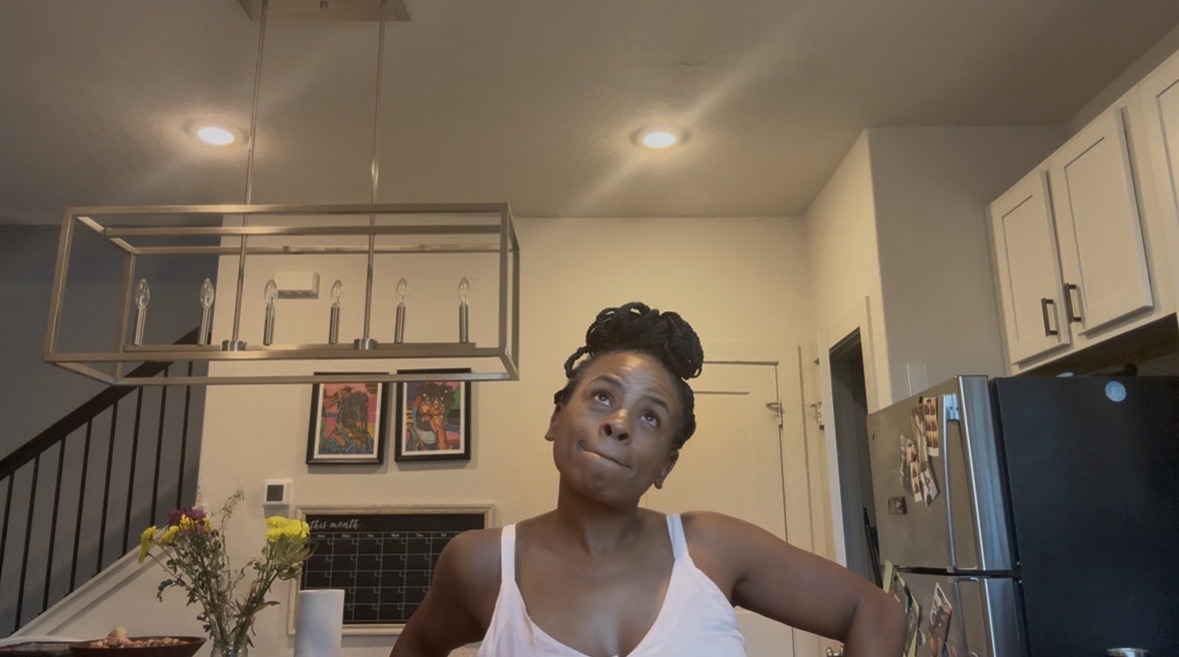
If you’ve ever wondered what a “typical day” looks like for just being a woman in her forties trying to keep it together.
The honest answer is that it’s not glamorous. There’s no perfect anything; the kitchen is a mess, clothes still need to be folded, money still needs to be made and my family still needs me. I wouldn’t have it any other way.
That’s why I protect my mornings because there will always be something.
My mornings start with a 5am alarm, a body that doesn’t always cooperate, and a lot of small, unremarkable decisions that somehow add up to a life that feels like mine again.
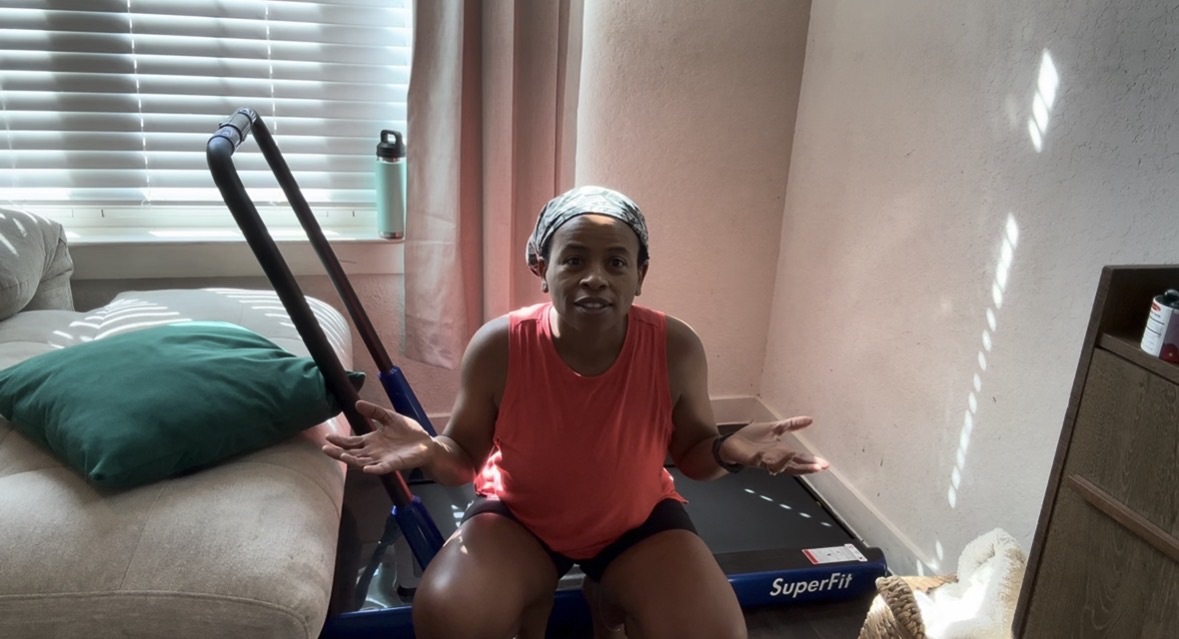
I filmed a mini walk-through of my morning routine this weekend. The real one, not the highlight version. Then I sat down afterward to talk through where The Restart series is headed, plus a shift I made recently that’s genuinely changed how my mornings feel. It’s not a hack. It’s not a five-step system. It’s smaller than that, and maybe that’s why it’s actually stuck.
If you’ve been following along with The Restart, this one connects some dots on where the series is going next. And if you’re just here for the “does anyone else’s mornings look like this” solidarity; that’s here too.
On Sunday, I dropped a YouTube video and started talking about my latest perimenopause symptom. I had no intention on bringing it up. But before I knew it, it came right out of my mouth.
Excessive peeing…that’s the latest symptom to appear in this wonderful journey of midlife. 🙃
Originally, I thought it was me. Or that maybe I was drinking more liquids. I slowed down on the liquids and determined that I hadn’t lost it. I was definitely going more than usual.
In true Kristie fashion; I took to the net to find out if excessive peeing and perimenopause are related. And the answer was, “yep!” It’s more to it but basically the lining of the bladder is thinner due to hormones. Also, found out there are three things that exasperate it.
Caffeine
Alcohol
Carbonation
So, if you’re experiencing excessive peeing in perimenopause. You might was to consider cutting these out. We’ll talk more about that on another day.
If you haven’t started the Restart Series than you might want to go there after this. It’s an 8 week series with tips and routines to help you navigate perimenopause and get back into fitness. This week is Week 7. It’s almost over.
Last week, I mentioned in a video that I was gifted a Perimenopause Support Pack and Protein Pack from Perelel. I’ve been using both products for a week. So far it’s been going great. I go into full detail in the video below. Plus, you can get 15% off your purchase of you use the code: Kristie15 at checkout at Perelel Health .
This post contains affiliate links. If you purchase through my link, I may earn a small commission at no extra cost to you.
I recently turned 48 years old. What did I do to celebrate? Let’s see…we took my son to the park, had his favorite dinner and spent the evening laying on the couch with my family watching a movie.
That might sound boring to you but honestly….it was perfect. So many birthday celebrations I’ve spent partying, traveling, and drinking until I couldn’t stand. Not to say I won’t ever do any of those things but this year was the exact opposite. Yet, arguably one of the best.
Birthday parties including lots of people and my phone blowing up with Happy Birthday messages was something I knew wasn’t going to be happening this year. And probably for the rest of my years. And that’s how I want it.
On December 26th, I knew things were going to change for me when it came to relationships. Because that was the day that I decided that those boundaries that I kept breaking could no longer be broken. Since saying “no” and showing up was changing how people saw me or viewed you. But that’s okay because I want authenticity.
Not caring about how people feel about this is the most freeing part of keeping the boundaries. It’s like something switched and I just knew things had to change.
My lack of feeling bad had me wondering if this had anything to do with perimenopause. I was shocked to see that it did. There’s a scientific explanation why our empathy decreases during this season of life.
I went even deeper to see if my need to throw away everything had to do with perimenopause. And again, clearing out things had a direct correlation to perimenopause, too
There’s so many things that I’ve been doing seemingly out of nowhere. But it actually has to do with perimenopause.
I’m going to get into the biology behind it now but in another post. Here’s my video about it.
If you’re in this season of life too and want to get back into movement but don’t know where to start; I made something for you.
If you’ve been putting off strength training because it feels like just one more thing on the list, this is the post for you. Somewhere in perimenopause, your body starts losing bone density and muscle mass faster than it used to. Estrogen was quietly protecting your bones and keeping your muscle responsive and when it starts to drop, that protection drops with it. This isn’t something gone wrong. It’s just what’s happening. And it’s also one of the most responsive things in the body to real strength training.
It’s Not About How You Look This is the part most fitness content skips. Strength training in your 40s and 50s isn’t about getting toned or chasing a look. It’s about whether your hips and spine can still hold you up the way you need them to for carrying groceries, keeping up with kids or grandkids, staying steady on your feet for decades to come. That’s the whole idea behind Episode 4 of the Real-Time Restart Series: Building Muscle That Actually Protects You. It’s a 20-minute heavy strength session built specifically around hip and spine work; the two places that matter most for long-term independence.
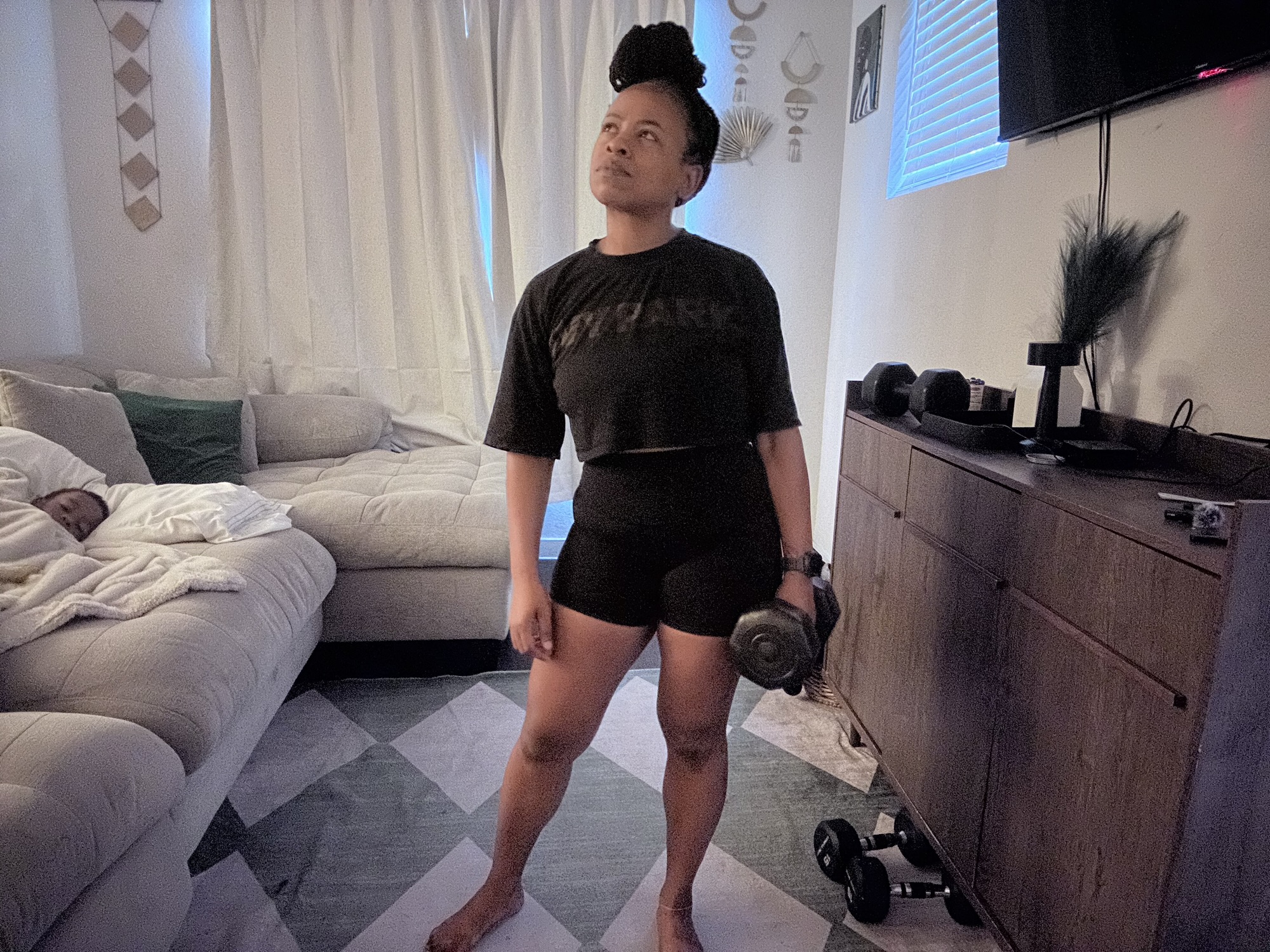
What’s In the Workout Three rounds of five moves: goblet squats, Romanian deadlifts, standing rows, reverse lunges with a hold, and weighted dead bugs. Nothing exotic. Just real load, real control, and real attention to the joints doing the work. If a movement feels wrong-hard instead of challenging-hard, that’s your body’s signal to drop the weight, not push through it. This guide is a starting point, not a prescription. You know your body best. Watch Episode 4 here:
If You’re Just Starting to Rebuild You don’t need a gym membership or a rack of dumbbells to begin. If you want a gentler, structured way to ease back into movement first, the Midlife Rebuild Starter Guide is a free 7-day plan built for exactly this stage — no pressure, no performance, just a place to start.
It walks you through what to expect physically and hormonally each day, plus a rest and recovery protocol so you’re not guessing when to push and when to rest.
The Bigger Picture This episode is part of the Real-Time Restart Series — a documentation of getting back into movement during perimenopause. The actual process, week by week.
Yesterday I walked into a room to get something, and I stood there for a full twenty seconds trying to remember what I came in for.
If that’s happened to you this week, you’re in the right place. Here’s what’s actually happening in your brain, why it gets worse on certain days, and a gentle reset for when it hits.
It’s Not Just You
Brain fog in perimenopause is real, it’s common, and it is not a personal failing. It’s not “getting older” in some vague way, it involves hormones.
Common ways it shows up:
● Losing a word mid-sentence
● Walking into a room and forgetting why
● Rereading the same paragraph three times
● Feeling like your thoughts are behind a pane of glass
If you’ve felt any of that, you’re not alone in it.
What’s Happening Hormonally
Here’s the actual science behind it.
Estrogen isn’t just a reproductive hormone — it plays a direct role in how your brain uses glucose for fuel, and it supports the systems involved in memory and word recall. As estrogen fluctuates and declines during perimenopause, your brain is quite literally running on a less stable fuel supply some days.
This is also why fog can feel patchy — sharp one day, foggy the next. It’s tracking your hormonal fluctuation, not a steady decline. That distinction matters: this isn’t permanent, and it isn’t linear.
Why Fog Hits Harder on Bad Sleep Days
If you’ve noticed the fog is worse after a rough night, that’s not a coincidence.
Poor sleep already impairs memory but add in fluctuating estrogen and often-elevated cortisol on top of that, and a bad night doesn’t just make you tired — it makes your brain foggier the next day.
Watch the Full Episode
This week’s video walks through all of this in more depth, plus a short follow-along reset for foggy days specifically.
It’s landing for you, and you’ve been meaning to get back into some kind of gentle movement routine but haven’t known where to start? This is a completely free, 7-day, no-pressure way back in.
The Gentle Reset (For Foggy Days Specifically)
This is a short sequence for foggy days — not a workout to push through, a reset to move through:
● 60 sec — slow neck rolls + shoulder circles (wakes up circulation without spiking heart rate)
● 90 sec — standing march in place, arms swinging (gentle blood flow, mild cortisol regulation)
● 60 sec — standing forward fold, let your head hang (parasympathetic reset)
● 60 sec — hand on belly, box breathing: 4 in, 4 hold, 4 out, 4 hold
None of this asks your brain to perform. That’s the point. On foggy days, the goal is regulation, not output.
What Actually Helps Long-Term
A few things that move the needle over time, not just today:
● Consistent wake times. It’s more powerful than bedtime for stabilizing the hormonal sleep-wake cycle
● Strength training a few times a week helps to support insulin sensitivity, which is tied to brain fog
● Protein at breakfast helps to stabilize blood sugar, which reduces the glucose swings your brain is sensitive to right now
● Naming it out loud. What’s wrong with saying “my brain is foggy today, that’s hormonal” . It removes the layer of self-judgment that makes fog feel worse
You’re Not Losing Your Mind
Your brain is adapting to a different hormonal environment than it’s ever run on before, and it will find its footing. If today was a foggy one, that reset is there anytime you need it.
If you’ve only caught the preview clips so far, here’s what’s actually happened.
Two Thursdays ago, I started something I hadn’t done before on on my YouTube Channel: an 8-week restart, filmed in real time, in my actual living room, before my son and husband are even awake (most of the time). Not a challenge. Not a transformation series. Just eight weeks of showing up for a body that’s going through something nobody handed me a manual for.
Week 1: The Restart
The first episode wasn’t about a workout plan. It was about naming the thing underneath it that the exhaustion a lot of us feel isn’t a discipline problem. Something in the body changed, and nobody told us the plan needed to change with it.
We kept the movement small on purpose. A 15-minute low-impact reset. Nothing that spikes you when you’re already running on empty. The point of Week 1 wasn’t intensity. It was proof that showing up, even in a small way, still counts.
Week 2: Feeding the Muscle You’re Trying to Build
By Week 2, I was doing the strength work and still felt soft and tired, and it took me a minute to realize why. I was building muscle and not feeding it.
So Episode 2 wasn’t a diet video; it was the other half of the equation. During perimenopause, your body holds onto muscle differently than it used to, and it needs more support to do it. Not a scary stat. Just context for why this feels harder than it did at 30.
What actually changed for me wasn’t a system. It was small things like adding almonds to whatever I was already making instead of building a separate meal, keeping one thing pre-made in the fridge so there’s no decision left to make at the end of a long day. The reframe underneath all of it: this isn’t about eating perfectly. It’s about giving the muscle you’re already building something to work with.
The workout that paired with it; 20-minute full-body strength session with dumbbells or bodyweight only was the “feed the muscle” follow-through.
Where We Are Now
Two weeks in, the pattern is already familiar to anyone who’s tried to rebuild something while life keeps happening around it: show up small, notice what your body actually needs, adjust, keep going. Not a straight line. Just consistent.
If you’re standing at the very beginning of this; the “I don’t even know where to start” part; that’s exactly what the Midlife Rebuild Starter Guide is for. Ni pressure, no plan to fail, just a gentle way back into movement for the body you actually have right now.
Week 3 airs this Thursday and we’re talking about the 10 minutes you actually have, not the hour you don’t.
Watch the series so far:
Episode 1: The Restart
Episode 2: Feeding the Muscle You’re Trying to Build
2:47am. Staring at the ceiling fan. Doing math on how many hours of sleep I had left if I fell back asleep right now. Which, of course, made falling back asleep completely impossible.
If you know that exact feeling, you’re not going crazy.
It’s Not Random
For a long time I thought my sleep was just bad. No pattern, no reason, just bad luck some nights and fine on others. Turns out that 3am wake-up isn’t random at all. It’s a hormone thing most of us were never told about.
As estrogen and progesterone shift during perimenopause, they take your sleep with them. Progesterone in particular has a calming, sleep-supporting effect and when it drops, so does your ability to stay asleep through the night. Add in cortisol that’s already running a little hot from stress, poor sleep, or both, and 3am becomes a very predictable place to land wide awake.
I would lay in bed at night so mad at myself about waking up at 3am. But turns out it wasn’t me.
This isn’t a willpower problem. It’s biology.
What It Actually Cost Me
Broken sleep didn’t just make me tired. It made me short. Short with my patience, short with my son and husband, and short with myself. I’d drag through the day running on caffeine and forced cheerfulness, then lie down at night and feel my whole body brace for it to happen again. I didn’t look forward to bedtime at all. The dread of the wake-up became almost worse than the wake-up itself.
That’s the part nobody told me about perimenopause insomnia. It’s not just the missing hours. It’s what missing them does to the rest of your life.
What Actually Shifted (I Didn’t “Fix” It)
I didn’t crack some code and suddenly sleep through the night forever. What I found were a few things that made the nights more manageable not perfect, just better.
A consistent wake time, even after a rough night. This mattered more than anything I did at bedtime.
A cooler room. Your body needs to drop its core temperature to fall asleep, and that’s harder during perimenopause. A fan or a few degrees down on the thermostat helps more than it sounds like it should.
Box breathing instead of reaching for my phone when I woke up. In for 4, hold for 4, out for 4, hold for 4. The anxiety about not sleeping was often worse than the waking itself — this gave my nervous system somewhere else to go.
None of it is dramatic. All of it is real and I’ve found that they are very helpful.
If This Is You Too
If you’re doing that same 3am math, staring at your own ceiling fan, I made something for exactly this moment. It’ a gentle way back into taking care of yourself, without any pressure to overhaul your whole life overnight.
This Thursday, I’m starting something I haven’t done before on this channel: I’m restarting my own routine, in real time, for eight weeks and I’m letting you watch.
It’s not going to be a highlight reel. Or a “day 1 vs day 60” transformation post. Just the actual, unpolished process of what it looks like to be a woman in perimenopause showing up for her body again, one week at a time, starting from wherever I actually am.
Why I’m Doing This Differently
You usually get to see the finished version; the after. You usually don’t get to see the skips, the part where you don’t feel like it or stumbling through workouts. The times where your knees ache for no reason or where you miss days. Not to mention the days you have one hundred interruptions and have to start again anyway. That skipped part is the actual work. It’s also the part most in this space aren’t willing to show.
So starting Thursday, I’m showing it. Every setback, every skipped day, every small win documented as it happens.
What You’ll See Each Week
Episode 1 drops Thursday on YouTube. Each week after this, a new episode follows; same time, same honesty. Some weeks will look like progress. Some weeks might look like nothing happened. Both are part of a real rebuild, and I want you to see both.
Don’t Want to Wait Until Thursday?
You don’t have to start until Thursday. If you’re also standing at the edge of your own restart right now; unsure where to begin, tired of programs that assume you have unlimited energy and zero hormonal chaos. I built something for exactly this moment and it’s ready today.
The Midlife Rebuild Starter Guide
It’s a free 7-day guide designed to meet you where you actually are not where a 25-year-old fitness plan assumes you are. Gentle entry points, no equipment required, and an honest week-by-week breakdown of what your body is doing hormonally so you stop second-guessing yourself.
Episode 1 goes live Thursday on YouTube. Plus, I’ll be back here and in the Quiet Rebuild Community on Facebook when it drops. If you’re doing your own quiet restart alongside mine, I’d genuinely love to know. You’re not doing this alone, even if you’re doing it quietly.
You haven’t changed what you eat. You haven’t stopped moving. And yet the number on the scale, or the way your jeans fit, is different than it was two years ago. If you’ve been quietly wondering what you did wrong, I need to tell you something: you didn’t do anything wrong.
This is one of the most common things I hear from women in this community, and it’s rarely talked about honestly. So let’s talk about it plainly. Here’s the actual science of what’s happening in your body right now.
Your Hormones Are Running the Show Not Your Willpower
During perimenopause, estrogen doesn’t just decline; it fluctuates unpredictably. Estrogen plays a role in how your body regulates fat storage and where it stores it. As levels shift, your body tends to hold more fat around the midsection, even at the exact same weight you were before. This isn’t about eating more. It’s a hormonal redistribution.
At the same time, progesterone, which has a natural calming, water-balancing effect, often drops earlier and faster than estrogen. Lower progesterone can mean more water retention, more bloating, and more inflammation. None of that shows up on a nutrition label.
Cortisol Is Quietly Working Against You
Many of us are running on high cortisol without even realizing it. Poor sleep, caregiving load, work stress, and the hormonal shifts themselves all elevate it further. Just learning about this has helped me give myself more grace when I feel overwhelmed.
Cortisol signals your body to hold onto fat, particularly around the abdomen, as a protective response. It’s biology reacting to a genuinely demanding season of life.
Insulin Sensitivity Changes, Too
As estrogen declines, your cells can become less responsive to insulin, meaning your body has to work harder to manage blood sugar. This can lead to more fat storage and more energy crashes even when your meals haven’t changed at all. This is exactly why strength training matters so much right now: it’s one of the most effective tools for improving insulin sensitivity during this transition.
So What Actually Helps?
Not a 30-day fix. Not cutting calories further that often backfires by adding more stress to an already taxed system. What helps is steady strength training, protein at each meal, consistent sleep and wake times, and giving your nervous system real recovery. Slow and sustainable. It’s unglamorous but it works with your biology instead of against it.
If your body feels different and nothing you’re doing has changed, that’s not a mystery: it’s perimenopause. You’re not failing at maintaining your body. Your body is adapting to a completely different hormonal environment than it had at 30, and it deserves a different approach, not more punishment.
You’re not starting over. You’re starting from experience and this time, you get to work with your body instead of against it.
Kristie
Build in silence. Show up for yourself.
Welcome To Quiet Rebuild Club.
Disclaimer: I’m not a doctor or medical professional. This post shares general information based on personal experience and public research, not medical advice. Please talk to your healthcare provider about your individual symptoms and needs.
The shift that made consistency feel possible for the first time in years.
I stepped on the scale on a Tuesday morning, and I’d gained weight.
I’d worked every day that week. I’d slept better than I had in months. I felt genuinely good…strong, even. And then that number erased all of it in about three seconds.
I’ve always stayed away from the scale in the past. I learned a long time ago that the scale doesn’t dictate how well you’re doing in your fitness journey. But I had just gotten a new fitness watch and I wanted to make sure it provided accurate information which meant I had to enter my weight.
If you’ve been in perimenopause for more than five minutes, you probably know this exact feeling. The scale stops telling you anything useful but it still has enormous power over how you feel about yourself.
That Tuesday was the last time I weighed myself.
Here’s what I learned, what I track instead, and why it changed everything about how I show up for movement.
Why the Scale Stops Working in Perimenopause
This isn’t a mindset problem. There’s actual physiology behind it.
During perimenopause, fluctuating estrogen affects water retention, fat distribution, and how your muscles respond to training. You can be building genuine strength, improving your insulin sensitivity, and reducing inflammation which is all real, meaningful progress but the scale shows a number that looks exactly the same or higher than last month.
The scale also doesn’t account for:
• Muscle you’re building (muscle is denser than fat so gaining it can show as weight gain even as your body composition improves)
• Hormonal water retention (can swing 3–5 lbs in 24 hours with no change in behavior)
• Sleep quality improvements (measurable metabolic benefit that won’t show on the scale)
• Cortisol regulation from consistent movement (enormous during perimenopause but invisible on the scale)
The scale isn’t lying. It’s just measuring the wrong thing.
The 4 Things I Track Instead
None of these require an app. None of them require a number. All of them tell me more about how my body is actually doing than any scale ever did.
1. Consistency — Did I Show Up?
Not how hard I worked. Not how long. Just: did I show up this week?
Consistency is the foundational marker. Three workouts in a week, even if two of them were 15 minutes, is a win. I note it. I acknowledge it. I don’t dismiss it because it wasn’t harder or longer.
2. Energy — How Do I Feel by Wednesday?
This one took me a few weeks to notice. When I’m moving consistently, my energy by midweek is genuinely different. Not perfect but more steady. Less crashing at 2pm. Less dreading everything.
I rate my energy daily. It helps determine what exercise I am going to be doing for today. It’s the most revealing data point I have.
3. Strength Markers — Can I Do Something I Couldn’t Do Before?
Not a PR. Not a benchmark. Just: is something easier than it was last month?
Maybe the glute bridges that were hard in week one feel manageable now. Maybe you’re doing the reverse lunges with heavier dumbbells. Maybe you carried the groceries up the stairs without thinking about it. That’s strength. Real, functional, this-is-what-it’s-for strength.
4. Sleep — Am I Getting More of It?
Consistent movement is one of the most evidence-backed ways to improve sleep during perimenopause. Not medication. Not a protocol. Movement.
I track whether I’m sleeping through more nights, waking up less, falling back asleep more easily when I do wake. Over 4–6 weeks, the pattern becomes undeniable. The days of staying up all night and waking up early like I will be okay are over. I prioritize my sleep to give me a better chance at a productive morning workout.
✦ FREE GUIDE FOR WOMEN IN PERIMENOPAUSE
If this resonated with you, I made something for exactly this moment.
The Quiet Rebuild Starter Guide is a free 7-day gentle return-to-movement guide built specifically for women in perimenopause.
No email tricks. No pressure. Just a starting point built for the body you have right now.
What This Actually Changed
When I stopped tracking weight and started tracking these four things, something shifted.
I stopped canceling workouts because I’d “already blown it” after a bad scale day. I stopped the mental math of whether my effort was “worth it” based on a number that doesn’t reflect the real work. I started noticing things I never noticed before like that I feel different after a hard workout week. That my energy is measurably better by mid-month when I’ve been consistent. That I’m sleeping longer and waking up less panicked at 3am.
The scale was making me doubt all of hardwork before I could see the real results.
Without it, I finally got to see them.
A Note on What This Isn’t
This isn’t about avoiding the scale forever or making it wrong to use one. It’s about noticing whether the scale is working for you or against you right now.
If you step on the scale and feel neutral; note it and moved on. But if you step on the scale and it determines your entire relationship with movement for the week, it might be worth asking what you’re actually measuring for.
For most women in perimenopause I talk to, the scale has become noise. It is a loud, demoralizing noise and quieting it is what finally let them hear what their body was actually saying.
Watch This Thursday
On Thursday July 3rd I’m going deeper on this on YouTube including the exact conversation I had with myself the morning I stepped off the scale for the last time, and what I’ve been tracking since.